
Last updated October 30, 2026
 Architectural shingles
 Metal roofing
 Tile roofing
 GAF
 Owens Corning
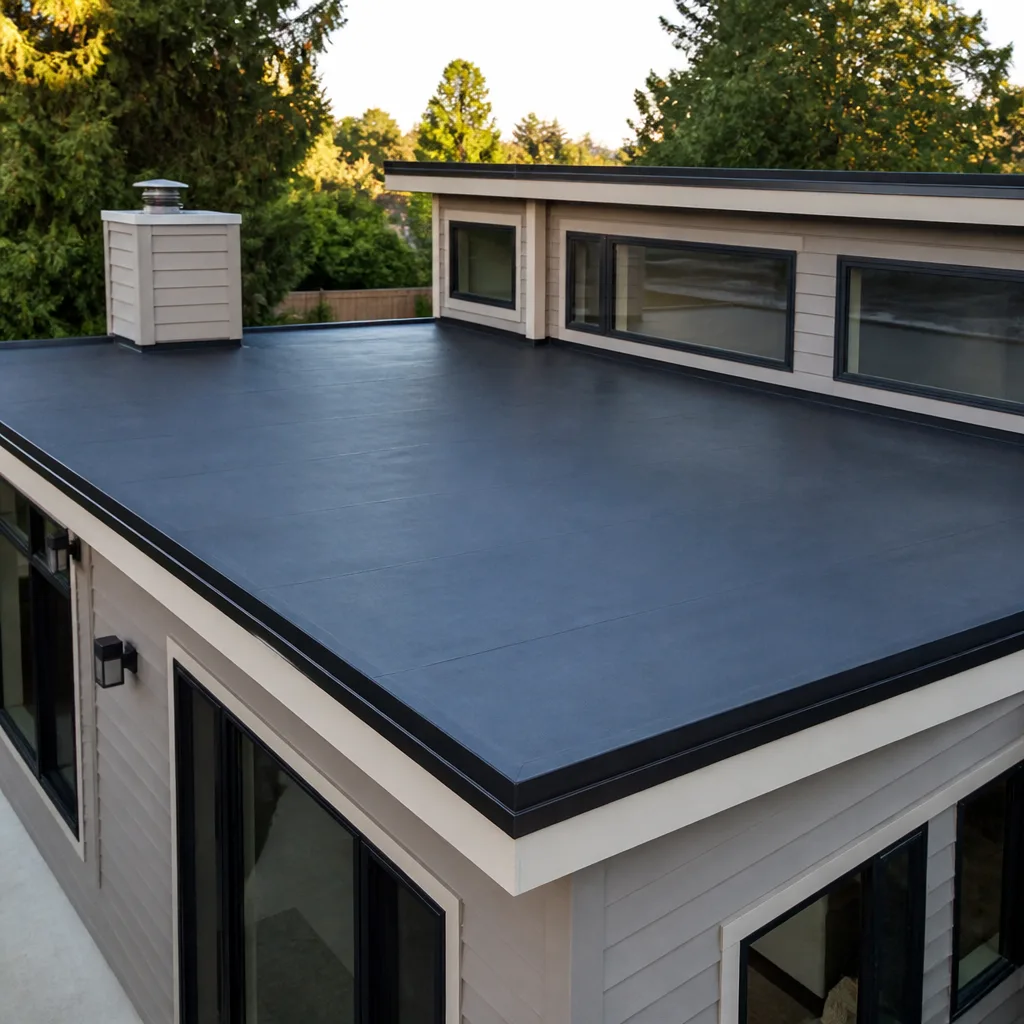 Flat & low-slope
Free roof inspection with deck photos before we talk money - GAF and Owens Corning certified installation
Roof Repair Troubleshooting: Common Problems and How to Fix Them
Here’s a fact most homeowners never learn until it costs them thousands: your ceiling stain is rarely sitting directly below the actual leak. Water travels. It hits the roof deck, runs along a rafter, drips onto insulation, and follows the path of least resistance until it finds a seam in your drywall. In Fountain Valley, where marine air keeps roofs damp for hours after sunrise, that travel path gets longer every year. This guide traces every common roof problem back to its true failure point, so when you call a contractor, you can describe what’s actually wrong instead of just pointing at a damp spot on the ceiling.
Quick Answer
Roof Repair services start with troubleshooting that maps a symptom to its source, not its visible location. The five most common roof problems – flashing failure, underlayment deterioration, shingle surface wear, drainage geometry issues on low slopes, and ventilation-driven condensation – each produce distinct, identifiable evidence. Most of these can be diagnosed with a flashlight and careful observation before you ever pick up the phone.
Styles & brands we work with
Table of Contents
- Symptom-to-Source: Why Your Ceiling Stain Is a Liar
- Flashing Failure: The Most Misdiagnosed Roof Problem
- Underlayment vs. Surface Material: Knowing the Difference Changes the Repair
- Ponding on Low-Slope Roofs: It’s a Geometry Problem, Not a Membrane Problem
- Granules in the Gutter: What That Grit Actually Tells You
- The Five Most Misdiagnosed Problems During Visual-Only Inspections
- What to Document Before Calling a Roofer
- Common Mistakes to Avoid
- When to Call a Professional
- Frequently Asked Questions
Symptom-to-Source: Why Your Ceiling Stain Is a Liar
Water stains on interior ceilings are the most common reason homeowners in Fountain Valley start looking for roof repair. The stain is real. The location is misleading. We’ve traced leaks from a stain in a second-floor bedroom back to a pipe boot penetration twenty feet up the roof plane, because the water rode along a rafter before pooling above the drywall. This is not rare – it’s the rule.
The reason is structural. Your roof deck is sloped, but the framing members under it are horizontal. Water hits the deck, migrates downhill until it encounters a seam, a nail, or a gap in the underlayment, then follows gravity down the nearest rafter or truss. That rafter does not end above your ceiling stain. It ends at the exterior wall, often several feet away. Insulation absorbs and redistributes the moisture, spreading it laterally before it finally seeps through the drywall at the weakest point.
What this means for troubleshooting: the interior evidence tells you that water is getting in, but almost never where it’s getting in. To find the source, you have to think like water. Start at the stain, look up, and identify which roof planes sit above that area. Then trace the nearest valleys, penetrations, and flashing transitions on those planes. In most cases, the actual failure point will be at one of those transitions – not in the middle of a shingle field. The Roof Inspection in Fountain Valley process we follow always starts with interior evidence, then moves to the roof plane with a specific search pattern based on that stain’s location. It cuts diagnosis time in half and prevents unnecessary exploratory tear-off.
Flashing Failure: The Most Misdiagnosed Roof Problem
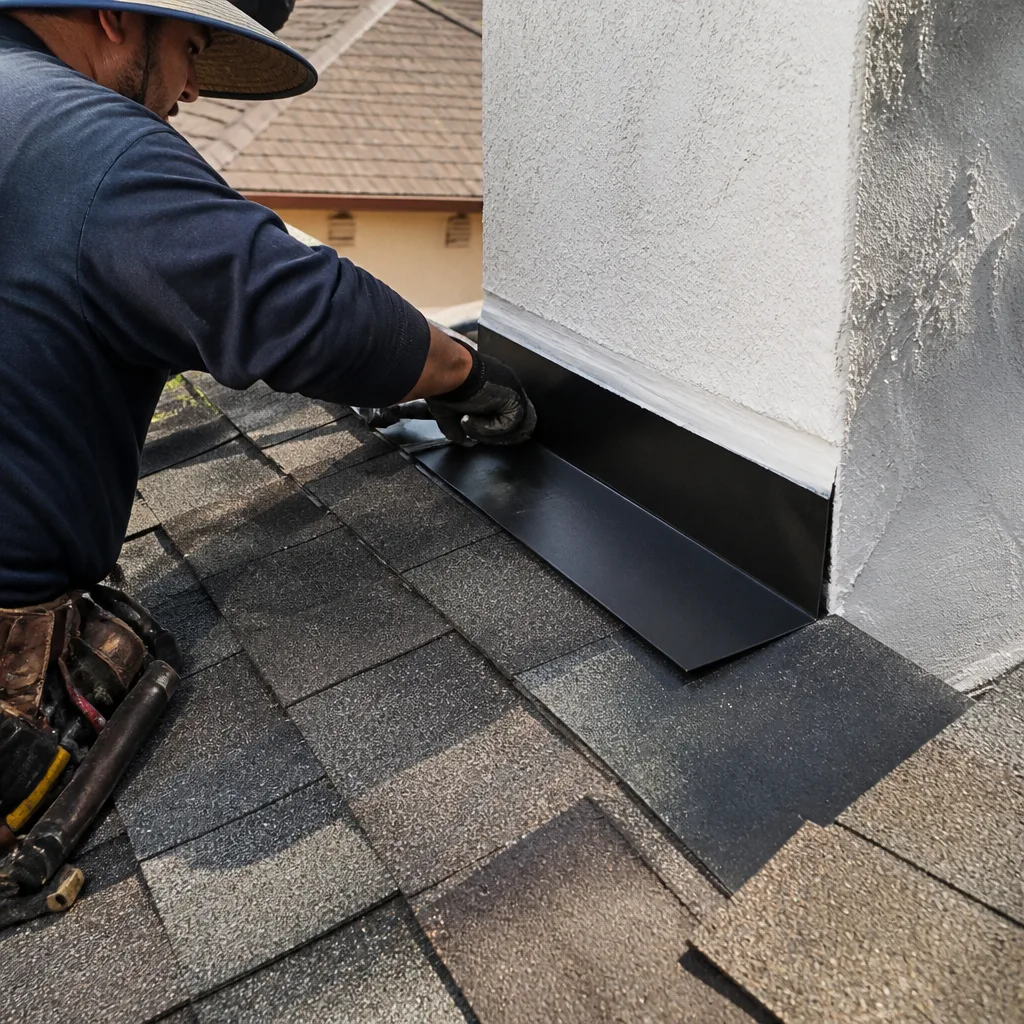
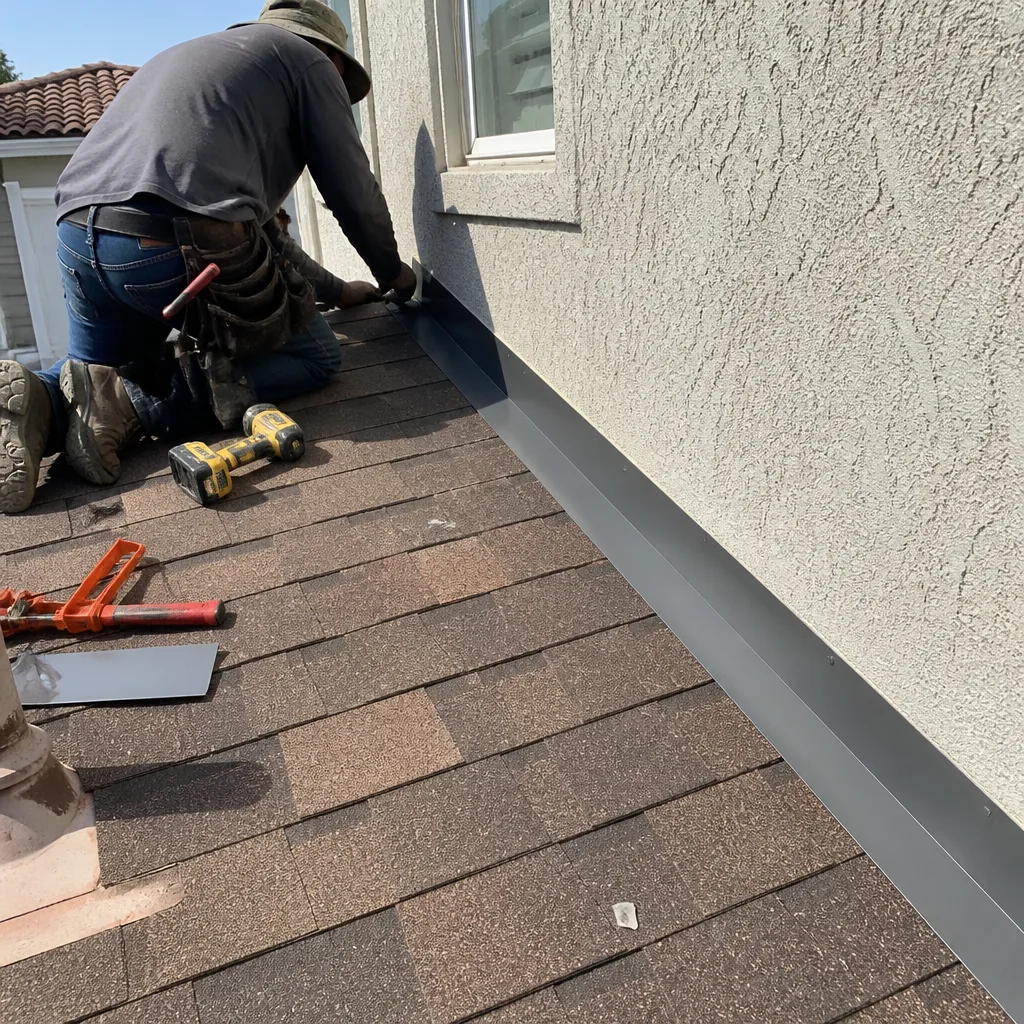
Flashing is the metal – aluminum, galvanized steel, or copper – installed at every transition point on a roof: valleys, chimneys, skylights, vent pipes, and the joints where roof planes change direction. When flashing fails, water gets in. When flashing is misdiagnosed, homeowners pay for shingles they didn’t need.
The telltale signs of flashing failure are specific. Look for dark staining or rust streaks running down from the flashing itself, not from the shingle field. Check for lifted or separated flashing at chimney bases, where the metal should tuck behind a counter-flashing reglet. Examine skylight curbs for exposed fasteners – any screw or nail head visible on a flashing surface is a leak waiting to happen, because flashing should be installed with hidden or sealed fasteners.
Here’s the counterintuitive part: flashing failure often presents as shingle damage. Water gets behind the flashing, runs under the shingles, and rots the decking below before showing any interior evidence. By the time you see the ceiling stain, the structural damage may be several months old. That’s why we work across seven major roofing brands – GAF, CertainTeed, Owens Corning, IKO, Atlas, Tamko, and Boral – but flashing systems come from separate specialty manufacturers. The brand of your shingles has nothing to do with whether the flashing was installed correctly. When we assess a roof, we evaluate the entire system, not just the visible surface layer.
To check flashing yourself, use a flashlight from the attic on a sunny day. Turn off attic lights and look for pinholes of daylight at any roof penetration. Light means a gap. Gaps mean water intrusion during the next rain. This takes ten minutes and costs nothing, but it’s the single most useful diagnostic step a homeowner can perform before calling for estimates.
Underlayment vs. Surface Material: Knowing the Difference Changes the Repair
Your roof is not a single layer. It’s a system: the surface material (shingles, tile, or metal), the underlayment (felt or synthetic barrier), and the deck (typically plywood or OSB). When homeowners describe a “roof leak,” they’re usually describing surface material failure. But in many roofs we inspect around Fountain Valley, the surface is fine and the underlayment underneath has quietly deteriorated past usefulness.
Underlayment fails for predictable reasons. Age is primary – organic felt underlayment has a working life that is often shorter than the shingles covering it. Heat is secondary. Attic temperatures in Fountain Valley routinely exceed 140 degrees in summer, and that heat bakes moisture out of the underlayment until it becomes brittle. When underlayment is brittle, it tears during shingle replacement, which means a simple repair becomes a much larger area of replacement simply to get back to solid substrate.
Here’s the diagnostic distinction. If you see water staining on the underside of your deck in the attic, and the shingles above that spot are intact, underlayment failure is likely. If shingles are missing, cracked, or blistered directly above the staining, surface material failure is the primary issue. In the first case, patching the shingles won’t fix anything – the water barrier underneath is already compromised. In the second case, replacing the damaged shingles and sealing the tear area may be sufficient.
This distinction matters because it changes the repair scope and the price tag. A surface-only repair might cost a few hundred dollars. Underlayment replacement under intact shingles is a more involved job, because the shingles have to be lifted, the old barrier removed, new underlayment installed, and the shingles reset. We give homeowners a clear breakdown of which layer failed and why, before any work begins. That’s the only way to avoid paying twice for the same repair.
Ponding on Low-Slope Roofs: It’s a Geometry Problem, Not a Membrane Problem
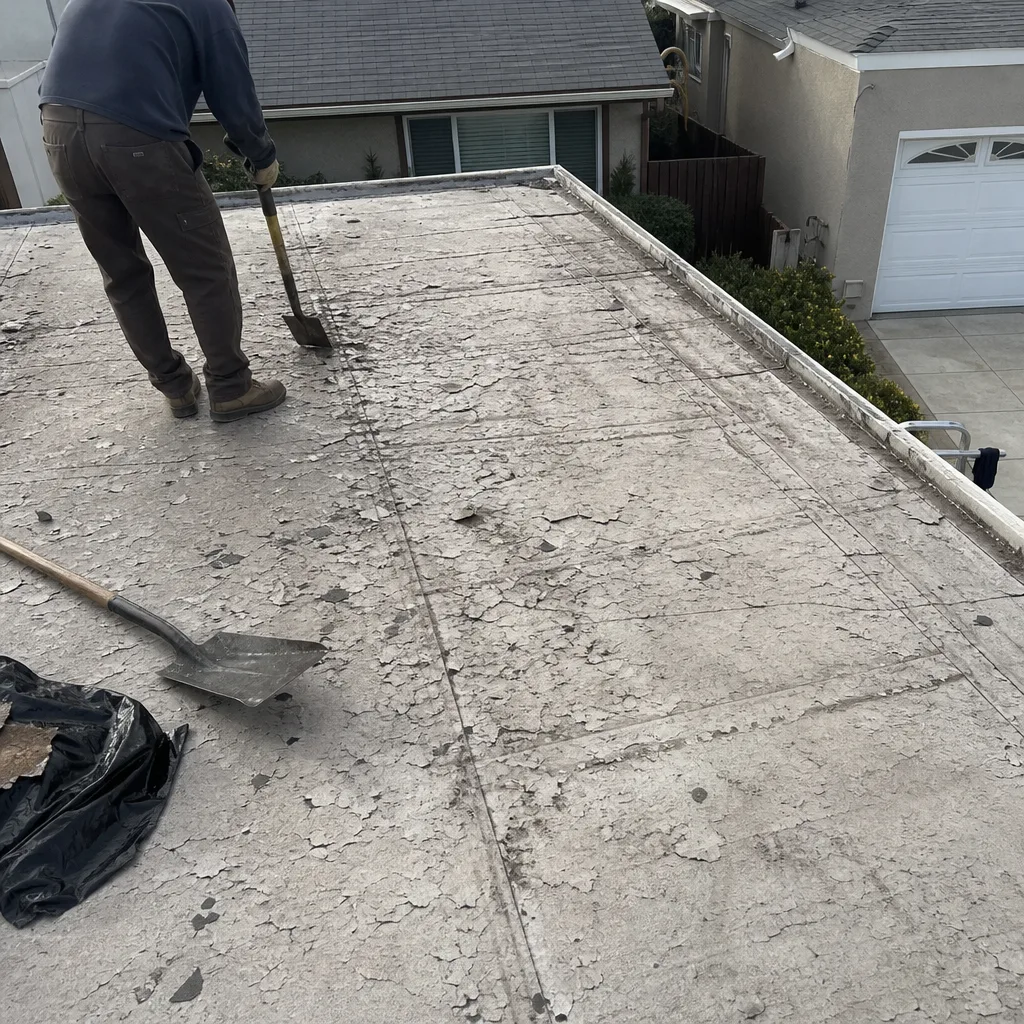
Flat and low-slope roofs are a different animal from pitched shingle roofs, and most troubleshooting guides treat them identically. That’s a costly mistake. When water pools on a low-slope roof and stays there for 48 hours after rain, the problem is usually not the roofing membrane. The problem is drainage geometry – the roof deck doesn’t slope enough to move water to the drains or scuppers.
Most building codes require a minimum slope of 1/4 inch per foot on low-slope roofs. Many older homes in Fountain Valley and surrounding Orange County were built to older standards or simply settled over time, reducing the effective slope. Slight foundation movement, added HVAC units, or sagging framing can all flatten a roof that once drained correctly. When slope fails, water ponds, and ponding water degrades any membrane – TPO, PVC, modified bitumen, or coating – far faster than UV exposure or age.
This is why patching a ponding area without addressing the slope is throwing money away. The patch may be perfectly installed, but the water will sit on it, find a seam or a penetration, and leak again. The fix is to restore slope using tapered insulation or a sloped fill system, then install the membrane over the corrected surface. It’s a bigger job than a patch, but it’s the only solution that lasts.
Our recommendation on low-slope roof repair in Fountain Valley is simple: fix the geometry first, then the membrane. We work with products from Tamko and Boral for low-slope applications, but the brand is less important than the slope correction underneath. If a contractor proposes patching alone without mentioning drainage, ask them how long they expect the patch to last under standing water. Watch their answer carefully.
Granules in the Gutter: What That Grit Actually Tells You
Here’s the misconception that starts expensive unnecessary replacements: a pile of granules in your gutter means your shingles are failing and you need a new roof. That’s simply not accurate. Granules are the ceramic coating on asphalt shingles, and some granule loss is completely normal – especially during the first year after installation, when surface granules that didn’t fully embed during manufacturing slough off.
The real question is why your shingles are losing granules. There are three distinct scenarios, and each requires a different response:
- Manufacturing release: New shingles shed surface granules for the first year or two, especially after installation. This is cosmetic, not structural. You’ll see granules in the gutter, but the shingle surface will still look uniformly textured.
- Power-washing damage: If a previous owner hired someone to power-wash the roof – often to remove moss or stains – the high-pressure water strips the factory-applied granule coating. This damage is visible as patchy, uneven granule loss concentrated where the spray hit hardest. The shingles are weakened and will fail prematurely. We’ve seen this in Fountain Valley neighborhoods where tile roofs are common and homeowners mistakenly assume pressure washing is appropriate for all roofing types. It is not.
- Age-related deterioration: After 15 to 25 years depending on shingle quality and attic ventilation, granules loosen naturally as the asphalt matrix breaks down. This looks uniform across the roof, not patchy, and it’s usually accompanied by curling shingle edges and visible fiberglass mat in spots.
Understanding which scenario you’re in requires looking at the shingles themselves, not just the gutter debris. Uniform granule loss with otherwise flat, intact shingles is either normal or a concern depending on age. Patchy loss with exposed asphalt is a specific problem. If you’re seeing patchy granule loss on a roof that’s only eight or ten years old, the previous owner likely power-washed it, and your repair conversation should focus on replacing the damaged sections – not the entire roof. We carry no allegiance to any single shingle brand, because we install GAF, CertainTeed, Owens Corning, IKO, Atlas, Tamko, and Boral products based on what each Fountain Valley home actually needs. Sometimes that’s a few bundles, not a full tear-off.
The Five Most Misdiagnosed Problems During Visual-Only Inspections
A visual-only inspection – typically performed from the ground or via a quick walk on the roof – catches obvious surface damage. It also misses the problems that actually cause leaks. Here are the five problems we most often find that a visual-only check either missed or misdiagnosed, and what it takes to close the gap.
- Underlayment rot beneath intact shingles. Surface shingles can look fine while the underlayment below has degraded. Checking requires lifting shingles carefully and inspecting the barrier underneath – not possible from the ground, rarely done during quick walk-throughs.
- Flashing sealant failure. Neoprene boots and caulk beads deteriorate from UV exposure and thermal cycling. They look acceptable from three feet away but fail when you flex them or apply a water test. We use a controlled water test on flashing transitions, running a garden hose at specific locations while someone watches the attic interior. It’s the most reliable way to confirm a leak source without opening the roof.
- Deck rot in valleys and at penetrations. Valleys channel more water than any other roof area, and the decking underneath often rots before shingles show damage. A visual-only inspection that doesn’t include an attic view can’t see this. We always inspect the underside of the roof deck from the attic when access exists.
- Ventilation-driven condensation mistaken for roof leaks. In Fountain Valley’s marine climate, poorly ventilated attics condense moisture on the underside of the roof deck, which drips and looks exactly like a leak. It is not a roof leak. It is an airflow problem. The fix is ventilation, not roof repair.
- Inadequate slope on low-slope decks. As discussed above, ponding is geometry, not membrane failure. Visual-only inspections from ground level often miss shallow ponding areas because they drain slowly but don’t look obviously pooled at any single moment. Checking slope requires a level and a known distance – a two-minute measurement that changes the entire repair recommendation.
If you’re comparing roof repair quotes in Fountain Valley and one contractor’s diagnosis contradicts another’s, ask what tests they performed. A flashlight, a level, and a hose are the three diagnostic tools that separate a real assessment from a quick eyeball estimate.
What to Document Before Calling a Roofer
The more information you bring to the first phone call, the more accurate your estimate will be, and the less likely you are to experience scope creep once work begins. Here’s what to capture before you call anyone:
- Interior photos with timestamps. Photograph every ceiling stain or damp spot from multiple angles. Include something for scale – a hand, a coin, a ruler. Note the date you noticed each stain and whether it has grown.
- Weather correlation. Write down when the stain appeared relative to rain. Did it show up during the storm, immediately after, or days later? Days-late stains often indicate slow travel through insulation, which points to a smaller, more persistent leak rather than a sudden breach. This is crucial diagnostic information.
- Attic observations. If you have attic access, go up with a flashlight after a rain and look for active moisture, dark staining on decking, water trails on rafters, or daylight at penetrations. Photograph anything you find. Turn off the lights and look for pinholes of light at roof transitions.
- Exterior roof photos. From the ground, photograph each roof plane – north, south, east, west – plus close-ups of any visible damage, missing shingles, lifted flashing, or debris accumulation. If you’re comfortable on a ladder, get gutter-level shots of the eaves, but never walk the roof yourself.
- Repair history. Write down any prior roof work, including dates, contractors, and what was done. A previous “valley repair” that failed within two years tells us something important about the roof’s condition and the quality of prior work.
- Your own observations organized by symptom. Don’t just say “the roof is leaking.” Say “there’s a stain on the master bedroom ceiling, northeast corner, appeared two days after the last rain, and I see a water trail on the rafter near the chimney in the attic.” That sentence alone cuts significant diagnostic time from the inspection.
This documentation process takes thirty minutes. It prevents the most common source of roofer-homeowner friction: discovering additional damage after work starts and having the project scope expand beyond what was originally quoted. When we assess a Roof Repair in Fountain Valley project, homeowner documentation helps us arrive at the accurate scope the first time.
Common Mistakes to Avoid
- Patching the interior stain without finding the roof source. Painting over a ceiling stain before the leak is fixed just means you’ll repaint again after the next rain. Find the source on the roof plane first, then address the interior cosmetic work.
- Assuming a new roof is always required. We see Fountain Valley homeowners quoted full replacements for problems that were isolated flashing failures or small repair areas. Ask your contractor to explain what specifically failed and why it cannot be repaired locally. If they can’t answer, get a second opinion.
- Trusting a ground-level visual inspection. Drone footage and ground-level photos show you the shingle surface. They do not show you underlayment condition, deck rot, flashing integrity, or attic ventilation. A real inspection includes the attic and, when necessary, a water test.
- Ignoring small leaks because they’re “minor.” A small stain is never a small problem. By the time water reaches your ceiling, it has been moving through your roof assembly for weeks or months. The visible stain is the last stop, not the first.
- Pressure washing any roof. This is the one we see most often in Fountain Valley and surrounding areas. Pressure washing damages shingles, tile, and even some metal roofing systems. If someone suggests pressure washing your roof, decline. Roof cleaning should use gentle methods appropriate to the material.
- Fixing a flat roof patch without addressing ponding. As covered above, patching a ponding area without correcting the slope is a temporary fix that fails on a schedule. Insist on slope correction as part of any low-slope repair.
When to Call a Professional
You can troubleshoot and document your roof from the ground and the attic, but actual repairs should involve a professional whenever the work requires walking on the roof surface, working at height, or opening any part of the roof assembly. Roof work is dangerous, and improper repairs done from a ladder can create leaks worse than the original problem.
Call a contractor when you see: active water intrusion during rain, daylight visible from the attic, sagging roof planes, shingle loss across multiple areas, or any evidence of structural movement. Also call if you’ve documented symptoms but can’t trace the source – the diagnostic equipment and experience needed for stubborn leak tracing is not a DIY proposition.
Willowbrook Roof Repair offers free estimates in Fountain Valley – call (866) 860-9404. We’ll walk the roof, inspect the attic, and give you a straight answer about what’s actually wrong and what it takes to fix it. We work across seven major roofing brands, which means the recommendation is based on your roof, not our inventory.
Frequently Asked Questions
Our Roofing Cost Breakdown: The Fountain Valley Homeowner’s Reference for 2026 shows how costs vary widely based on the failure type and repair scope. Minor flashing repairs or replacing a few damaged shingles typically runs in the low hundreds, while underlayment replacement or slope correction on a low-slope roof is significantly more involved. Call (866) 860-9404 for an exact quote – estimates are free, and we’ll show you exactly what failed before any price is discussed.
Yes, in most cases a roof leak can be fixed without a full replacement. The key is identifying whether the failure is isolated – flashing, a penetration, a small shingle section – or systemic, such as widespread underlayment failure or advanced shingle deterioration. Isolated failures are repairable. Systemic failures mean repair becomes a recurring expense and replacement starts making more financial sense. We’ll always tell you which situation you’re in.
Start in the attic, not on the roof. Use a flashlight after rain to look for water trails on rafters, dark staining on the deck, and daylight at penetrations. Run a garden hose on specific flashing transitions while a second person watches the attic interior. Document everything with photos and timestamps. This gives your contractor a head start on diagnosis.
A roof that “leaks” during dry weather is usually not leaking at all – it’s condensating. In Fountain Valley’s marine climate, warm humid air rises into a poorly ventilated attic and condenses on the underside of the deck when temperatures drop. The fix is attic ventilation improvement, not roof repair. We confirm this by checking attic airflow and looking for condensation patterns during dry-weather inspections.
Most isolated repairs – flashing replacement, shingle patches, penetration sealing – are completed in a single day. Larger repairs involving underlayment replacement on sections of the roof plane may take two to three days. Slope correction on low-slope roofs is a larger project that typically runs several days depending on the roof’s square footage. We’ll give you a clear timeline before work starts.
Yes, we’re based in Fountain Valley and cover the surrounding Orange County area. The estimate is genuinely free, and it includes a full roof inspection, attic access when available, and a written breakdown of what we found and what we recommend – with no obligation to proceed. Call (866) 860-9404 to schedule.
The Bottom Line
Roof repair troubleshooting is fundamentally about finding the source, not treating the symptom. Interior stains misdirect. Granules in gutters get misread. Ponding gets patched instead of corrected. Flashing gets ignored for shingles. The homeowners who avoid unnecessary replacement and repeated repairs are the ones who understand the system and ask precise questions. Document what you observe, trace evidence back to failure points, and get a contractor who walks the Willowbrook Roof Repair home standards of diagnosis first, recommendation second. From a single flashing fix to a full Roof Replacement in Fountain Valley, the right diagnosis is what keeps you from paying for work you don’t need.
Written by the team at Willowbrook Roof Repair, serving Fountain Valley since 2012. For more guides & resources, visit our blog.
See the difference
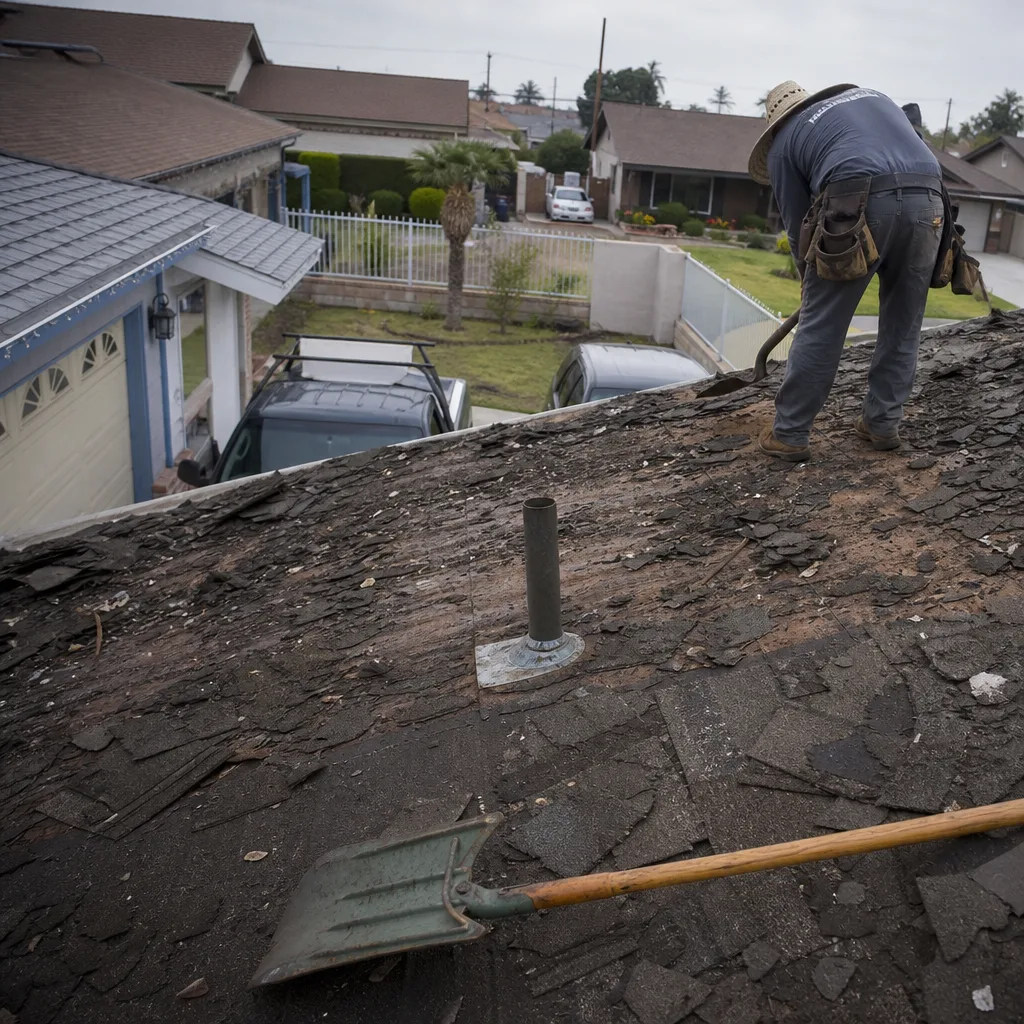 Before
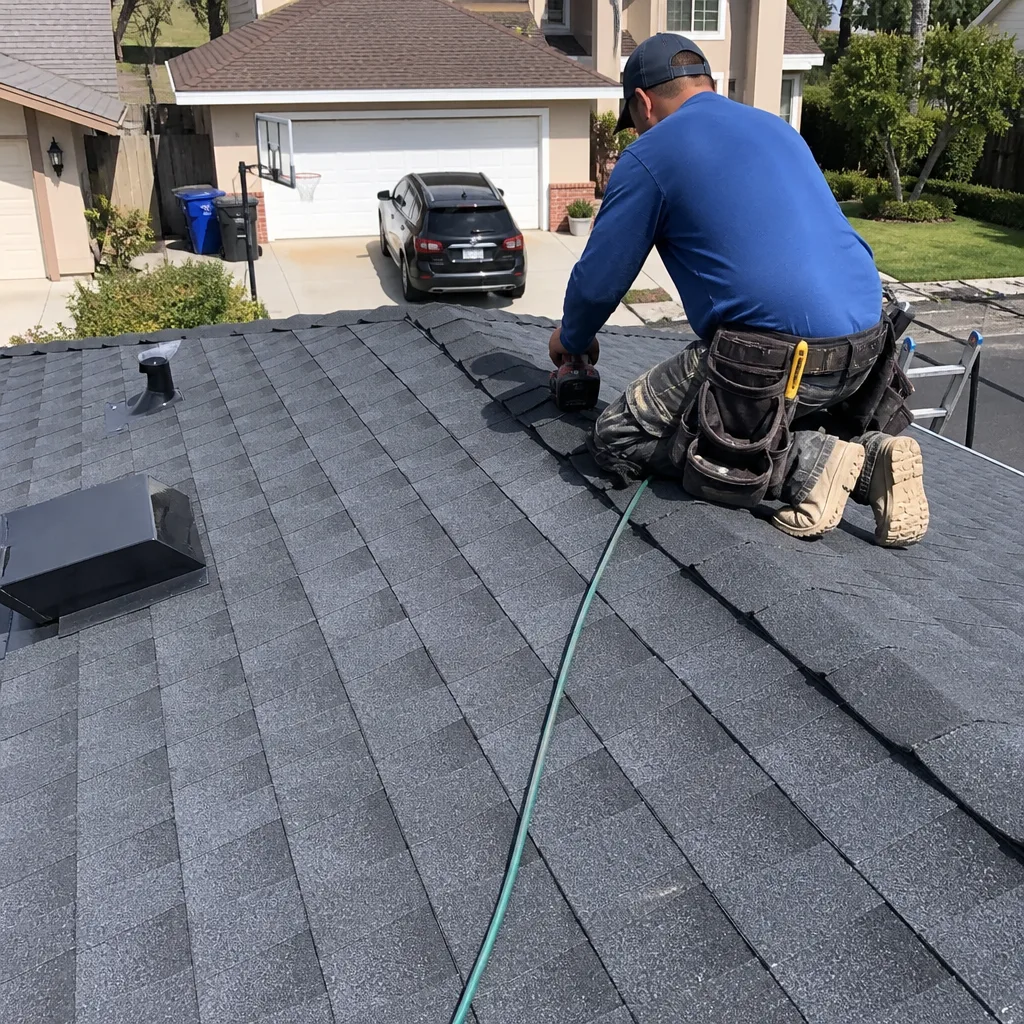 After
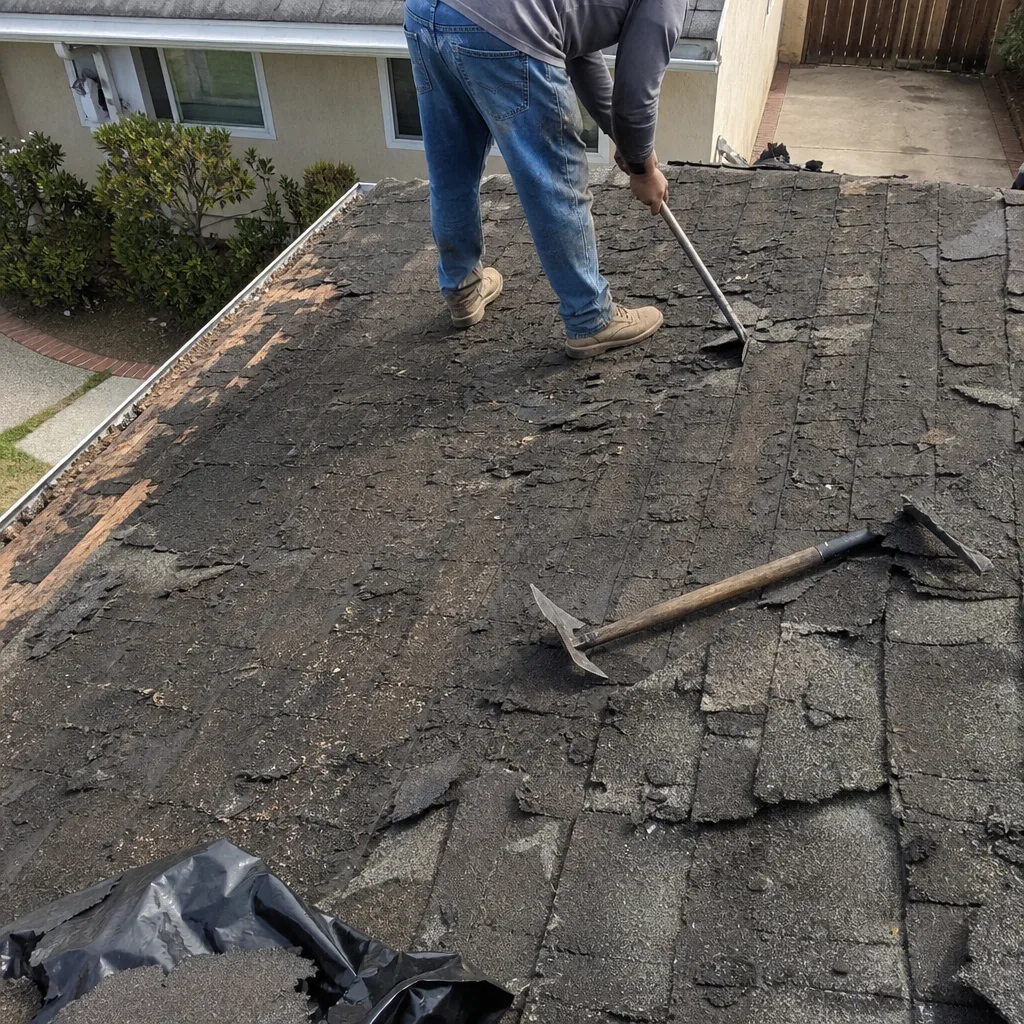 Before
 After
 Before
 After