Last updated October 30, 2026
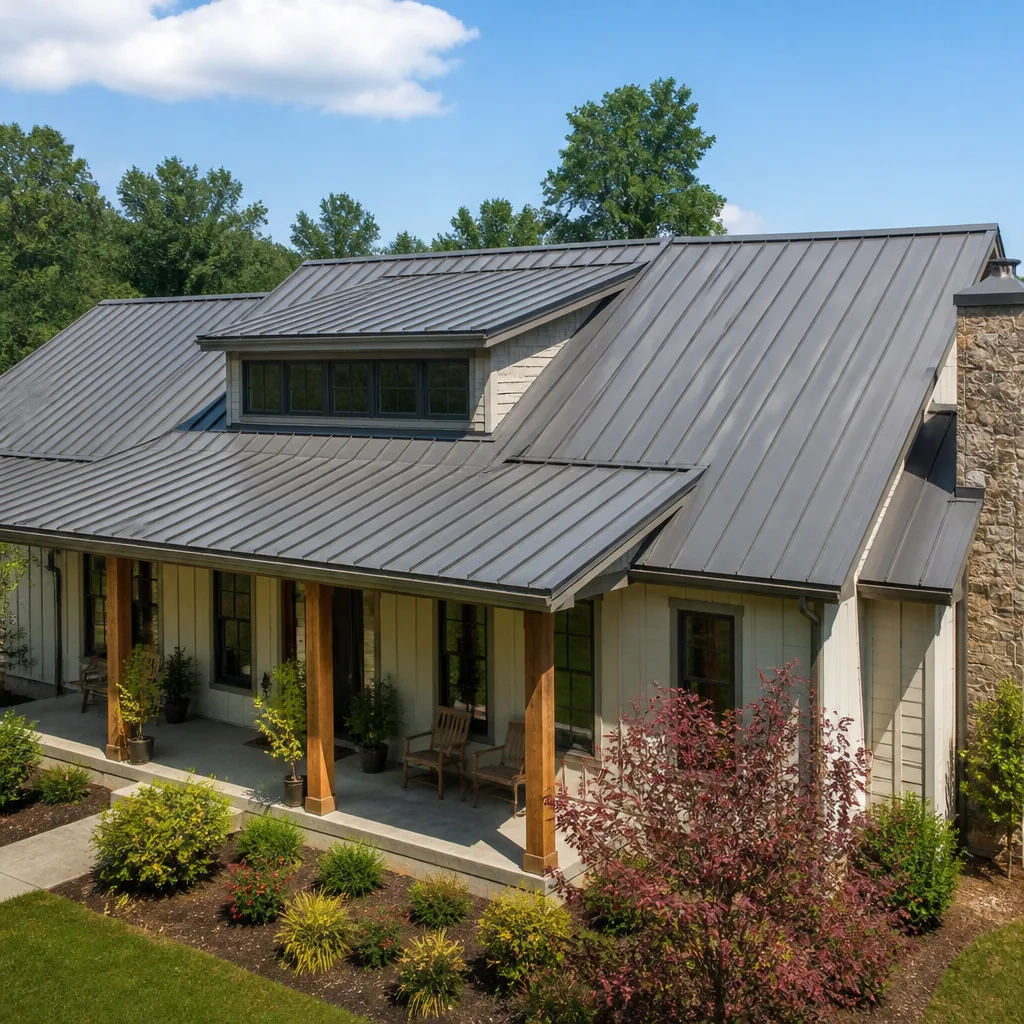 Metal roofing
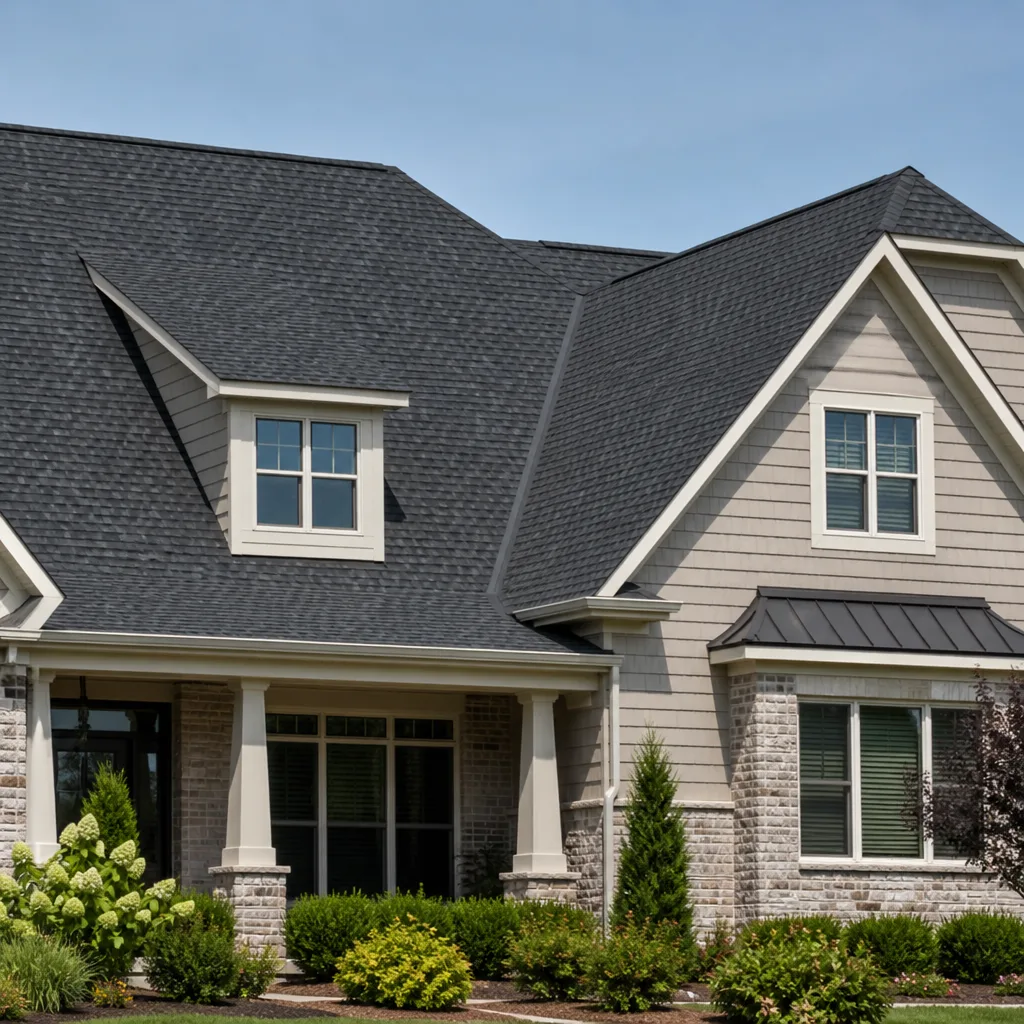 Architectural shingles
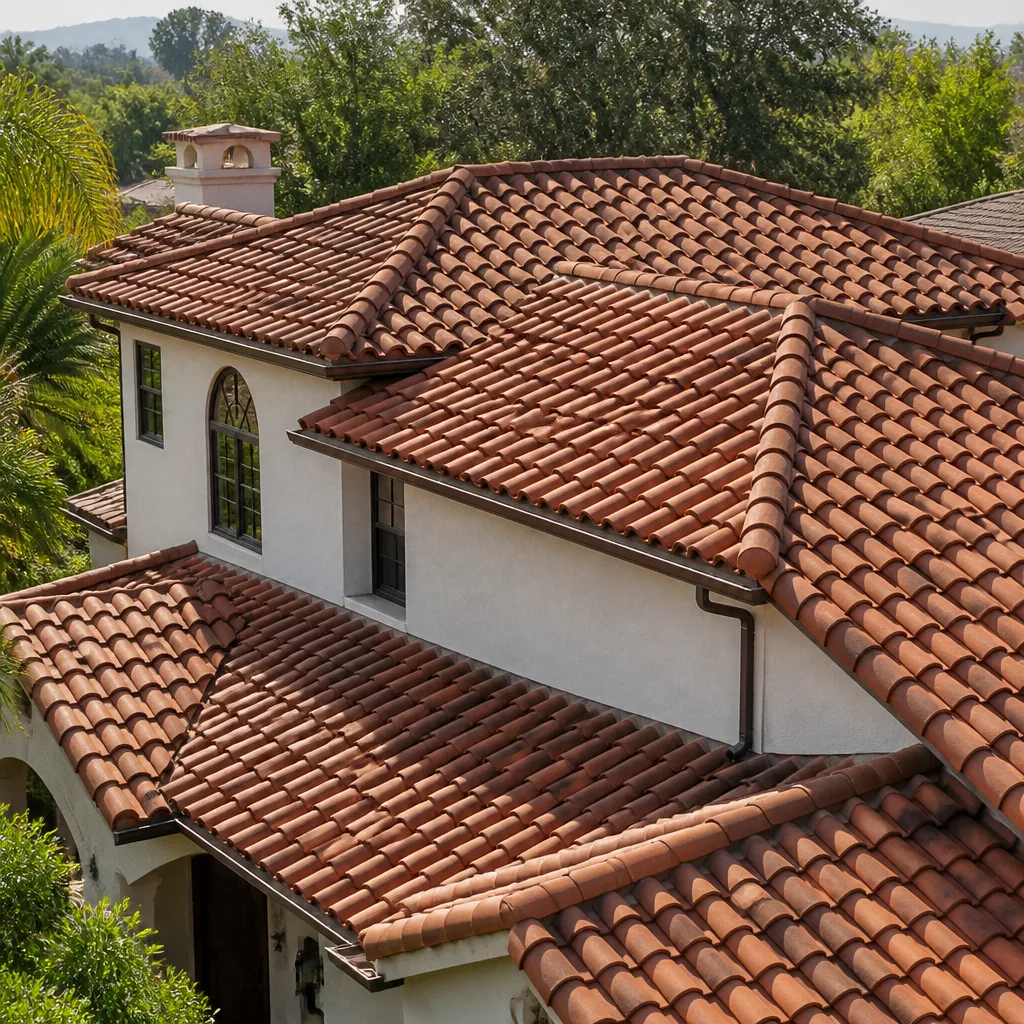 Tile roofing
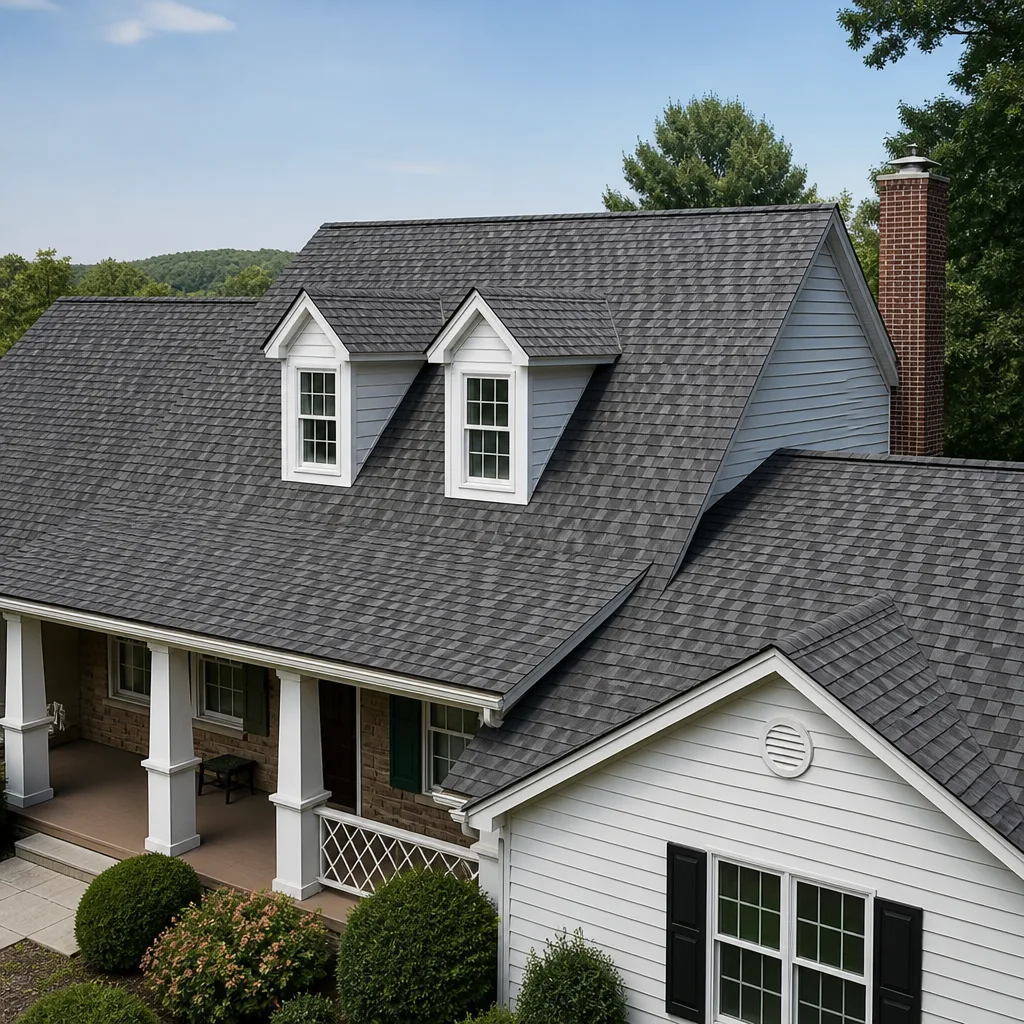 GAF
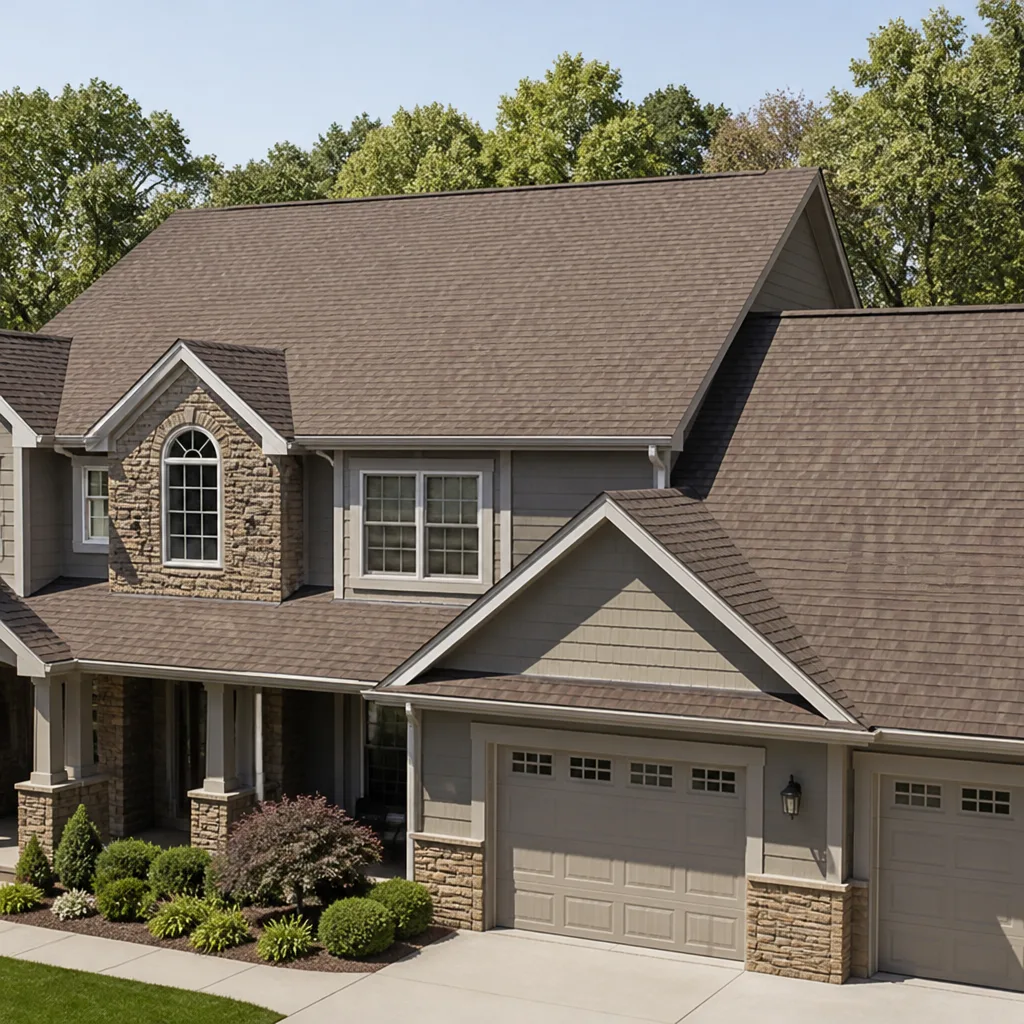 Owens Corning
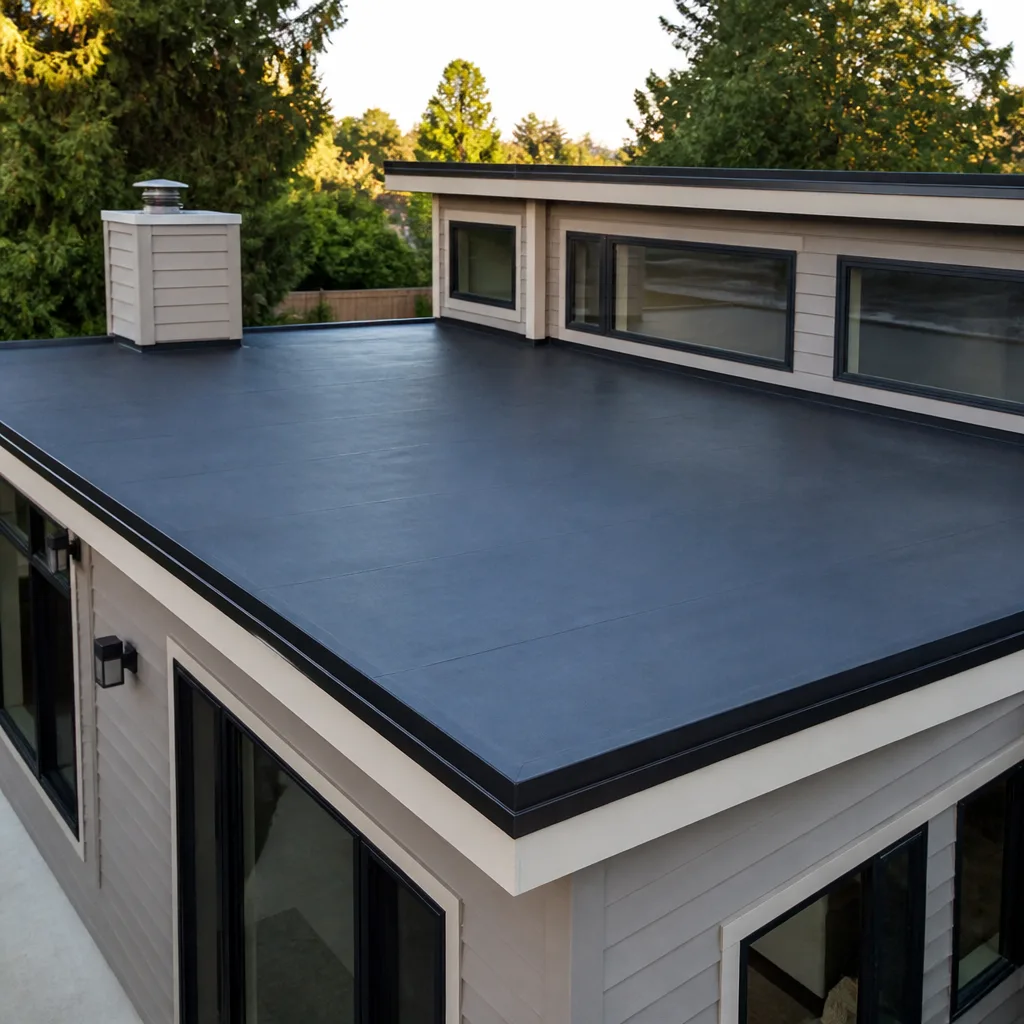 Flat & low-slope
Free roof inspection with deck photos before we talk money - GAF and Owens Corning certified installation
How to Hire a Roofing Contractor in Fountain Valley: A Step-by-Step Guide
Here is a truth most Fountain Valley homeowners learn the hard way: the most expensive roofing mistakes are rarely made by hiring an unlicensed contractor. California’s CSLB license lookup takes 30 seconds and most people do it. The real problems come from hiring a licensed contractor who is locked into one shingle manufacturer’s rebate program, or one who sells you a roof and then hands the actual installation to a subcontracting crew they have never worked with before. This guide walks through the less obvious vetting steps that separate a roof you will not think about for 20 years from one you will be fighting about in 18 months, and you can find more guides & resources on our blog. We will cover how to read a proposal line by line, how to verify a permit was actually pulled with the City of Fountain Valley, and the specific questions that reveal who is really installing your roof.
Quick Answer
Hiring a roofing contractor in Fountain Valley comes down to five steps: verify the CSLB license, confirm the company installs multiple shingle brands so recommendations are not driven by a supplier agreement, get in writing whether the crew is in-house or subcontracted, read the proposal line by line before signing, and verify the permit is actually pulled with the City of Fountain Valley before any work begins. A written workmanship warranty with specific nail patterns and overlap dimensions is non-negotiable. Call Willowbrook Roof Repair at (866) 860-9404 for a free estimate and a plain-language proposal.
Styles & brands we work with
Table of Contents
- Step 1: Verify the CSLB License and What It Does Not Tell You
- Step 2: Identify Single-Brand Dealers and Why They Limit Your Options
- Step 3: Ask Who Physically Installs the Roof and Get It in Writing
- Step 4: Read the Proposal Line by Line and Question Vague Line Items
- Step 5: Confirm the Permit Was Pulled With the City of Fountain Valley
- Step 6: Demand a Workmanship Warranty With Specifics, Not Boilerplate
- Step 7: Factor in Fountain Valley-Specific Roofing Conditions
Step 1: Verify the CSLB License and What It Does Not Tell You
The roof inspection process starts before any contractor sets foot on your property. Go to the California Contractors State License Board website and run the license number. Confirm the classification is C-39 (roofing) and that the license is active, not suspended or expired. Check that the name on the license matches the name on the proposal. Check that the license has no outstanding judgments or disciplinary actions. This part takes five minutes.
Here is what the CSLB lookup does not tell you. It does not tell you whether the contractor who bid the job will be the contractor who performs the job. It does not tell you whether the company uses employee crews or day laborers. It does not tell you whether the contractor is a “preferred installer” for one shingle manufacturer and financially incentivized to sell you that product regardless of what your roof actually needs. Those are the questions this guide addresses.
In Fountain Valley specifically, a contractor must also comply with city building codes that govern roof covering materials, underlayment requirements, and ventilation. A licensed contractor who works regularly in Fountain Valley will know that the city follows California Building Code Title 24, which includes specific requirements for cool roof materials on certain reroofing projects. Ask whether the contractor has pulled permits in Fountain Valley before. You want someone who knows the counter staff at City Hall, not someone who will be learning Fountain Valley’s process on your project.
Step 2: Identify Single-Brand Dealers and Why They Limit Your Options
Most homeowners do not realize that a large number of roofing contractors are effectively sales arms for one shingle manufacturer. The manufacturer labels them a “preferred contractor” or “certified installer.” In exchange for the badge, the contractor gets rebates, marketing support, and volume pricing. That sounds fine until you realize the recommendation you are getting may have more to do with the rebate than with your roof.
Ask the contractor directly: “How many shingle manufacturers do you install?” If the answer is one or two, you are talking to a single-brand dealer. That limits your material options and your price leverage. If the contractor only installs, say, GAF, you will never get a genuine comparison against CertainTeed or Tamko. You will never know whether an Atlas shingle would have performed better in Fountain Valley’s sun and occasional Santa Ana-driven heat, or whether Boral’s stone-coated steel would have been a smarter long-term choice for your specific roof pitch.
We work across seven major roofing brands: GAF, CertainTeed, Owens Corning, IKO, Atlas, Tamko, and Boral. That is more brand coverage than most roasters stock, and it matters because it means our recommendation follows your roof, your budget, and the Fountain Valley climate, not a preferred-vendor arrangement. Built around your roof, not a brand deal.
Here is the practical test. When a contractor recommends a specific shingle, ask: “Why this brand over the other major manufacturers?” A contractor who can give you a specific, technical answer about nail zone width, granule adhesion, or wind rating is working from product knowledge. A contractor who gives you a vague answer about “it’s what we’ve always used” is working from habit or a rebate program.
Step 3: Ask Who Physically Installs the Roof and Get It in Writing
This is the question almost no one asks, and it is the one that determines whether your roof lasts. The salesperson who gives you the bid is not the person on the roof with a nail gun. Ask who is.
Some roofing companies use W-2 employee crews. Those crews are trained, supervised, background-checked, and held to the company’s workmanship standards. Some roofing companies subcontract the installation to a separate crew. That crew may be excellent, or it may be the lowest bidder the contractor could find that week. The problem is you have no way of knowing, and the contractor’s workmanship warranty may not extend to work performed by an unaffiliated subcontractor.
Specific questions to ask:
- “Are the installers your employees or subcontractors?” Direct question. Direct answer required.
- “If subcontractors, how long have you worked with this specific crew?” A crew the contractor has used for six years is different from a crew they found on Friday for a Monday start.
- “Will the same crew start and finish the job?” Some companies swap crews mid-project depending on scheduling.
- “Who supervises the job site?” You want a named person, not “someone will be around.”
- “If there’s a workmanship defect, who fixes it, your company or the sub?” Get the answer in writing.
We handle inspection, repair, and full replacement with one contractor relationship. From a single damaged section to a full tear-off and replacement, one call covers the entire job. Roofing is the only thing we do, which means there is no general contracting operation with roofing bolted on as a side service. When a Fountain Valley homeowner asks us to put the crew arrangement in writing, we do it without hesitation. You should expect the same from any contractor you are considering.
Step 4: Read the Proposal Line by Line and Question Vague Line Items
A legitimate roofing proposal is specific. A vague proposal is a bill for surprises. When you receive a bid in Fountain Valley, here is what to look for, line by line.
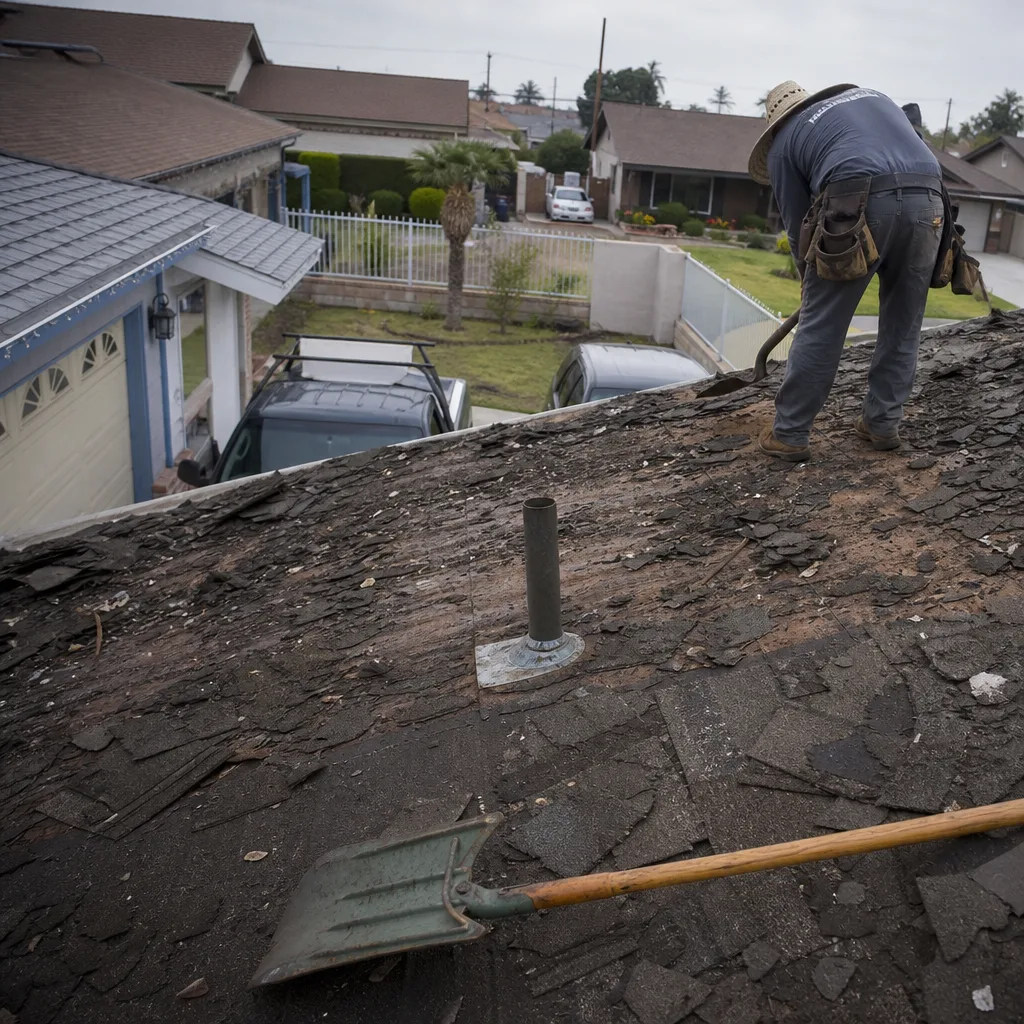
“Tear-off and haul” should include:
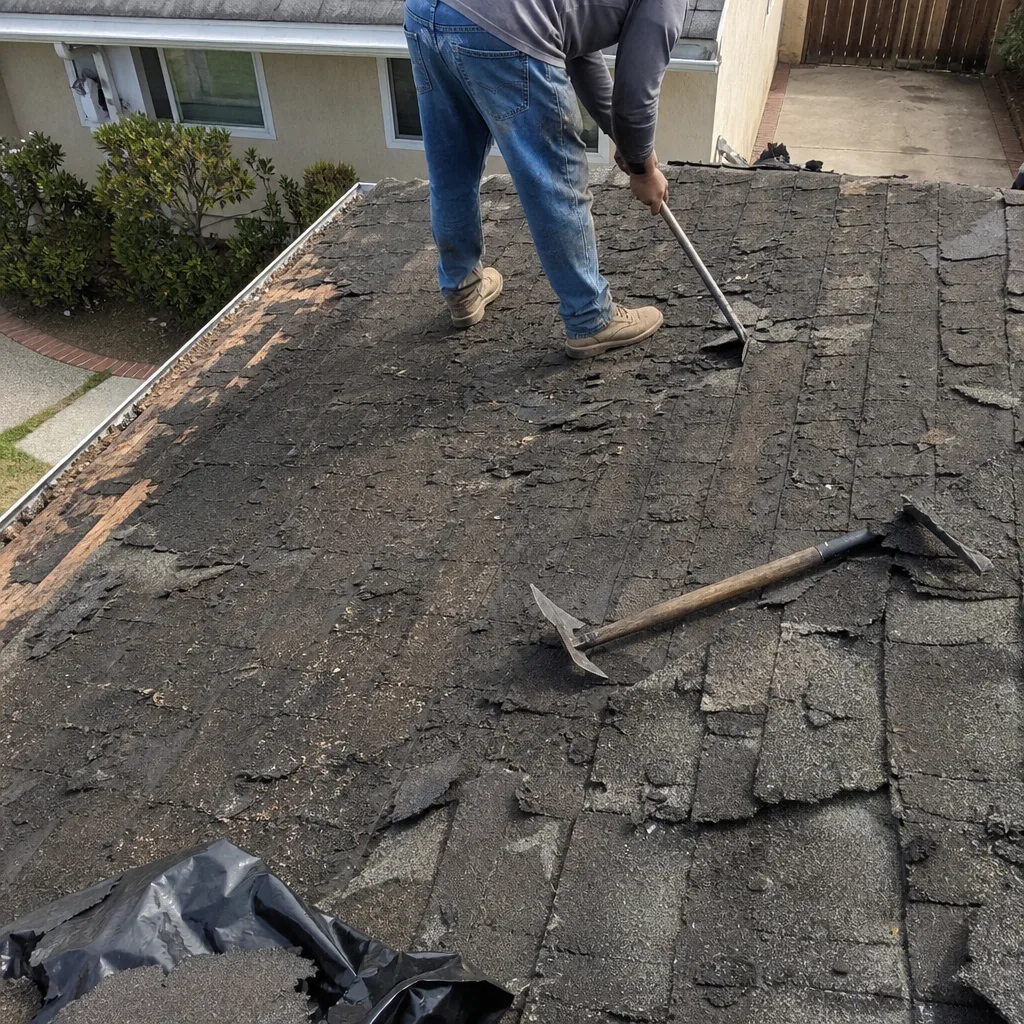
- Removal of all existing shingles down to the decking
- Inspection of the decking and written documentation of any rotted or damaged sections
- Replacement of damaged decking at a specified cost per sheet
- Haul-away of all old shingles, nails, and debris
- Magnetic nail sweep of the property (roofing nails are magnetic and will end up in your driveway and lawn if not swept)
If the line item just says “tear-off and haul” with no breakdown, ask for the breakdown. It should specify the cost per sheet of OSB or plywood decking replacement so you are not hit with a change order at $95 per sheet for something that should cost $38 per sheet.
Underlayment spec matters more than shingle brand. Ask what underlayment is being installed. Is it 15-pound felt, 30-pound felt, or synthetic? Synthetic underlayment costs more but resists tearing and water penetration better. In Fountain Valley, where mornings can be damp with marine layer and afternoons hot, underlayment is the last line of defense before water hits your decking. The proposal should name the specific underlayment product, not just “underlayment.” We see proposals in Fountain Valley that specify underlayment as “felt paper” when the homeowner paid for a premium system. If it is not named, it is not guaranteed.
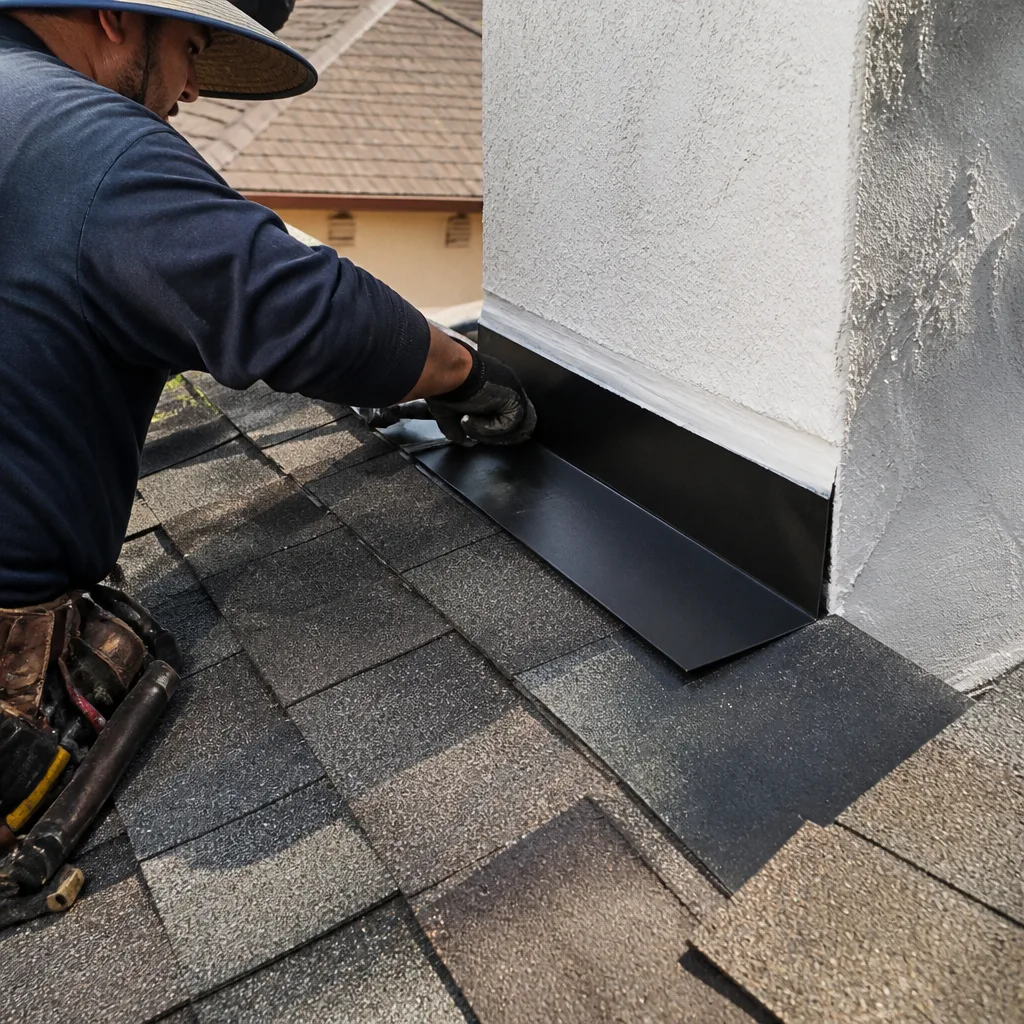
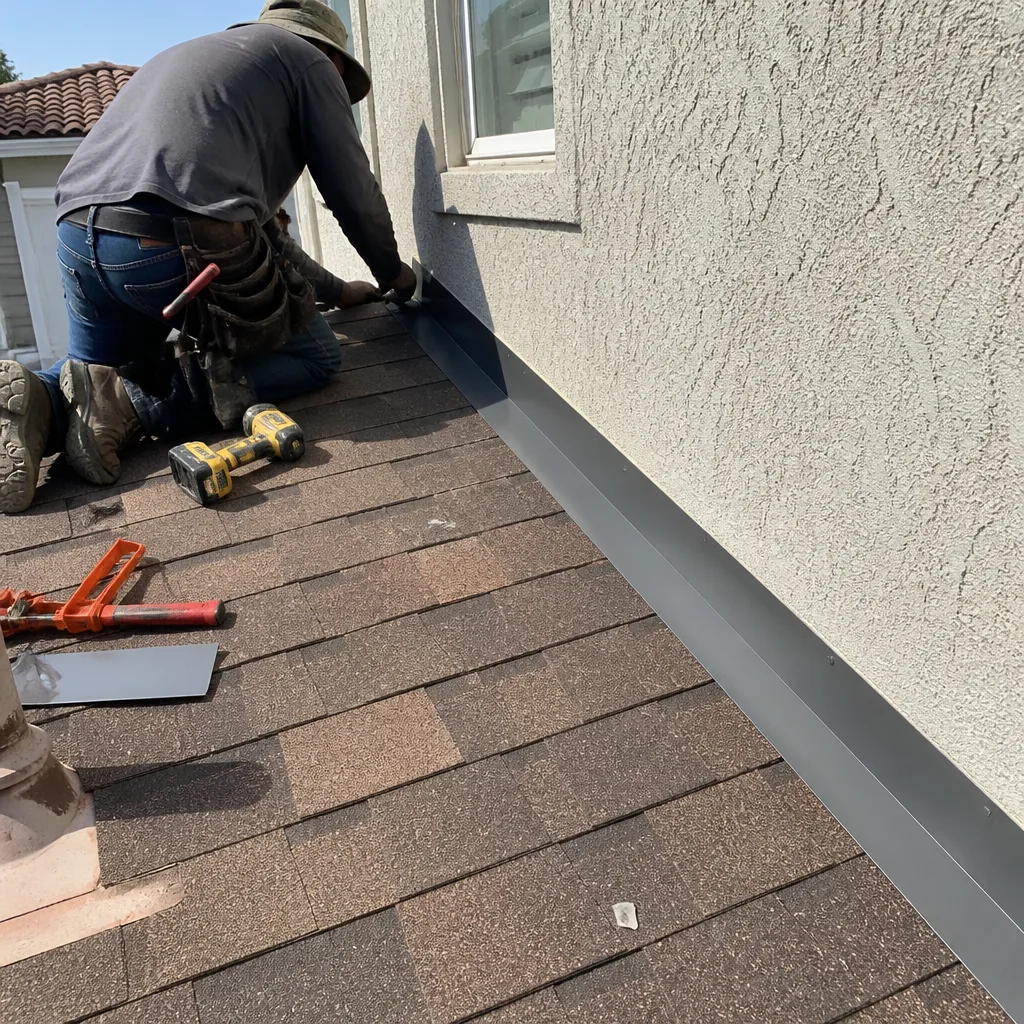
Watch for “miscellaneous flashing.” Flashing is the metal that seals roof penetrations: chimneys, vent pipes, skylights, valleys, and wall intersections. Flashing failures cause more leaks than shingle failures. A proposal that says “miscellaneous flashing” with a lump-sum number is hiding something. A legitimate proposal lists each flashing location: chimney flashing, step flashing, counter flashing, pipe boot flashing, valley metal, and drip edge. Each line item should have a cost. If the contractor cannot itemize flashing, the contractor does not know what flashing the roof actually needs, or is intentionally burying padding in a vague line item.
Roof repair in Fountain Valley follows the same discipline. Even a small repair proposal should name the specific materials being used, the exact location of the repair, and the cost of each component. Vague is a red flag at any scope.
Step 5: Confirm the Permit Was Pulled With the City of Fountain Valley
In Fountain Valley, a full roof replacement requires a building permit from the City of Fountain Valley Community Development Department. A repair may or may not require a permit depending on scope, but any reroof over a certain square footage triggers the permit process. A contractor who tells you “we don’t need a permit for this” is either misinformed or avoiding inspection.
Here is the step-by-step verification process:
- Ask the contractor to pull the permit. Do not offer to pull it yourself. If the contractor pulls the permit, the contractor’s license is tied to the permit and to the inspection record.
- Get the permit number. Before any work starts, ask for the permit number.
- Verify it online. The City of Fountain Valley offers online permit lookup through the Community Development Department. Enter the permit number and confirm it is issued to your address.
- Confirm the inspection was scheduled. A reroof requires a city inspection before the final shingles go on. The inspector checks underlayment, nailing pattern, flashing installation, and ventilation. If the contractor skips the inspection, you have no third-party verification that the roof was installed to code.
- Get a copy of the passed inspection. After the inspector signs off, get a copy of the final inspection report. This is your proof the roof met Fountain Valley’s code requirements.
A contractor who is reluctant to pull a permit is a contractor you do not want on your roof. The roof replacement process should include permit pulling and inspection scheduling as standard practice, not as an optional add-on.
Step 6: Demand a Workmanship Warranty With Specifics, Not Boilerplate
Manufacturer warranties cover the shingles. Workmanship warranties cover the installation. Shingle defects are rare and the manufacturer warranty applies. Installation defects are common and the contractor warranty applies. You need both, and you need the workmanship warranty to be specific.
Boilerplate workmanship warranty: “All workmanship guaranteed for 5 years.” That sentence is unenforceable because it does not define what “workmanship” means. A legitimate workmanship warranty specifies:
- Nail pattern: How many nails per shingle, and where they are placed relative to the nail zone. A 4-nail pattern is standard. A 6-nail pattern is required for high-wind zones. The warranty should state the pattern used.
- Overlap dimensions: The manufacturer specifies minimum overlap for side laps and stagger. The warranty should confirm installation followed the manufacturer’s published specification for that specific shingle line.
- Flashing integration: How flashing was sealed at each penetration, what sealant was used, and how the step flashing was woven into the shingle courses. A workmanship warranty that does not mention flashing is not a workmanship warranty.
- Decking attachment: What fasteners were used to secure decking to rafters, and whether any decking was replaced.
- Duration and transferability: How long the workmanship warranty runs and whether it transfers to a new owner if you sell the home. In Fountain Valley, where homes change hands regularly, transferability matters.
Ask the contractor to put these specifics in the warranty document. A contractor who cannot specify nail pattern and overlap dimensions does not have quality control on their installations.
Step 7: Factor in Fountain Valley-Specific Roofing Conditions
Fountain Valley has a specific set of conditions that affect roofing decisions. The city sits roughly 5 miles from the Pacific, so roofs get morning marine layer and afternoon sun. The UV exposure is significant year-round. Santa Ana winds, usually in fall and winter, produce gusts that test shingle adhesion and flashing seals. Summer heat regularly pushes attic temperatures past 140 degrees Fahrenheit, which accelerates shingle granule loss on poorly ventilated roofs.
These conditions mean material choice matters more in Fountain Valley than in a mild coastal climate. A shingle with high granule adhesion matters when UV is relentless. A shingle with a strong wind rating matters when Santa Ana winds hit. Adequate attic ventilation matters when attic temperatures spike. These are not theoretical considerations. We see roofs in Fountain Valley neighborhoods, from the older homes near Mile Square Park to the newer developments east of the 405, with premature granule loss because the original roof was built with a cheap shingle and minimal ventilation.
Here is what Fountain Valley-specific roof selection should address:
- Cool roof requirements: California Title 24 requires cool roof materials on certain reroofing projects. A cool roof reflects more sunlight and absorbs less heat, which reduces attic temperatures. Ask whether your project triggers the requirement and what cool roof material the proposal includes.
- Wind resistance: Santa Ana winds are strongest in the fall. Ask about the wind rating of the proposed shingle and the nailing pattern. High-wind installations use 6 nails per shingle instead of 4.
- UV-rated underlayment: In a hot climate like Fountain Valley, synthetic underlayment holds up better than traditional felt under constant UV exposure during the tear-off to re-cover window.
- Ventilation upgrades: If your attic has inadequate ventilation, a reroof is the cheapest time to fix it. Adding ridge vents, soffit vents, or a powered attic fan while the roof is open costs a fraction of what it costs later.
Our approach is straightforward. We start with an honest inspection. You will know exactly what needs to be done, and why, before any work begins. A roof in Fountain Valley should be chosen for Fountain Valley conditions, not for whatever shingle a contractor happens to have in the warehouse. For step-by-step maintenance advice, see our Roof Repair Maintenance Checklist for Fountain Valley Homeowners.
Common Mistakes to Avoid
- Hiring a single-brand contractor without knowing it. If the contractor only installs one or two shingle brands, you are getting a sales pitch for that brand, not a recommendation for your roof. Ask how many brands they install.
- Signing a proposal with a “miscellaneous flashing” line item. Flashing failures cause more leaks than anything else on a roof. If flashing is not itemized by location, you do not know what you are paying for.
- Not asking who installs the roof. The salesperson is not the installer. Ask whether the crew is in-house or subcontracted. If subcontracted, ask how long the contractor has worked with that crew.
- Trusting the contractor pulled the permit without verifying it. Pull the permit number and verify it on the City of Fountain Valley’s online system. Confirm the inspection happened and passed before paying the final invoice.
- Accepting a boilerplate workmanship warranty. “All workmanship guaranteed” is not a warranty. Demand nail pattern, overlap dimensions, and flashing integration in writing.
- Not accounting for Fountain Valley’s attic temperatures. If your roof is being torn off, it is the cheapest time to add ventilation. Ignoring it now means paying twice later.
- Choosing a general contractor for the roofing work. A general contractor who does roofing as one of fifteen services does not have the same focus as a company that does roofing and nothing else.
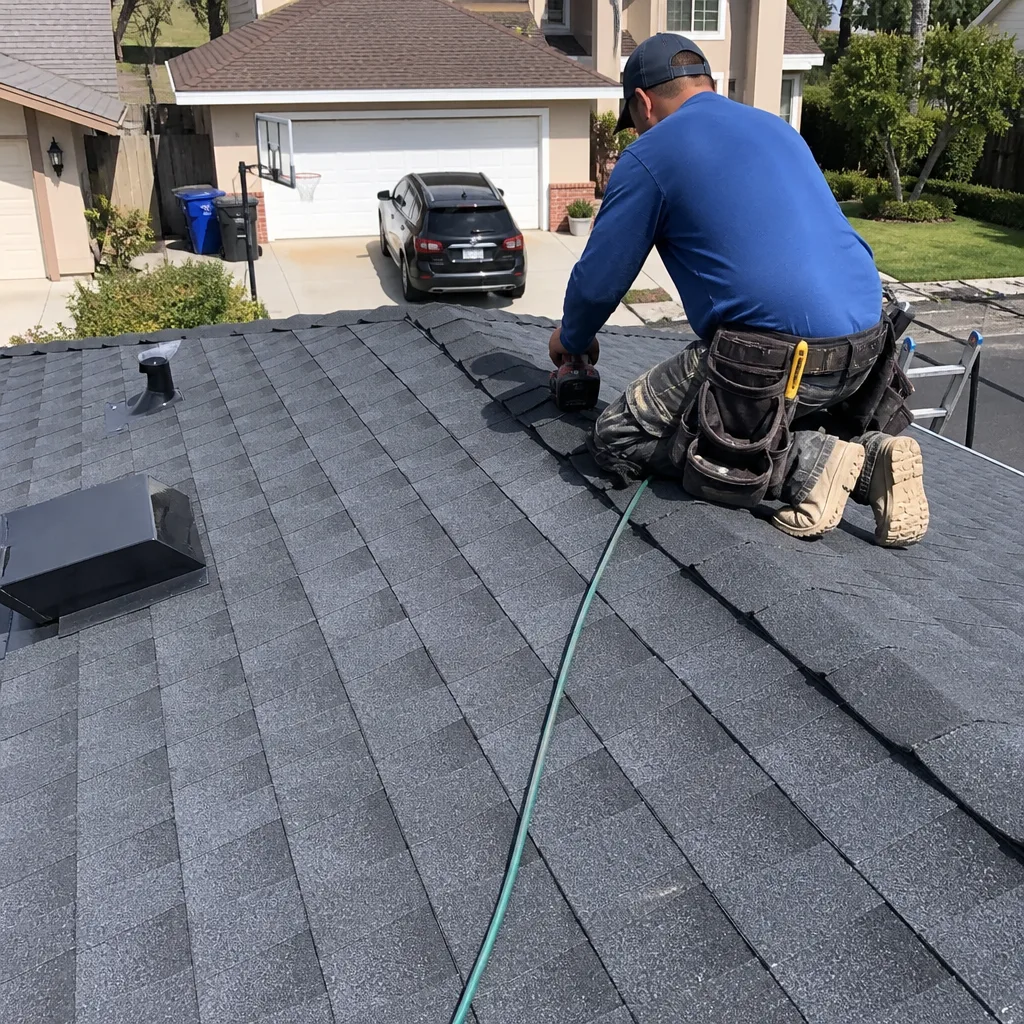
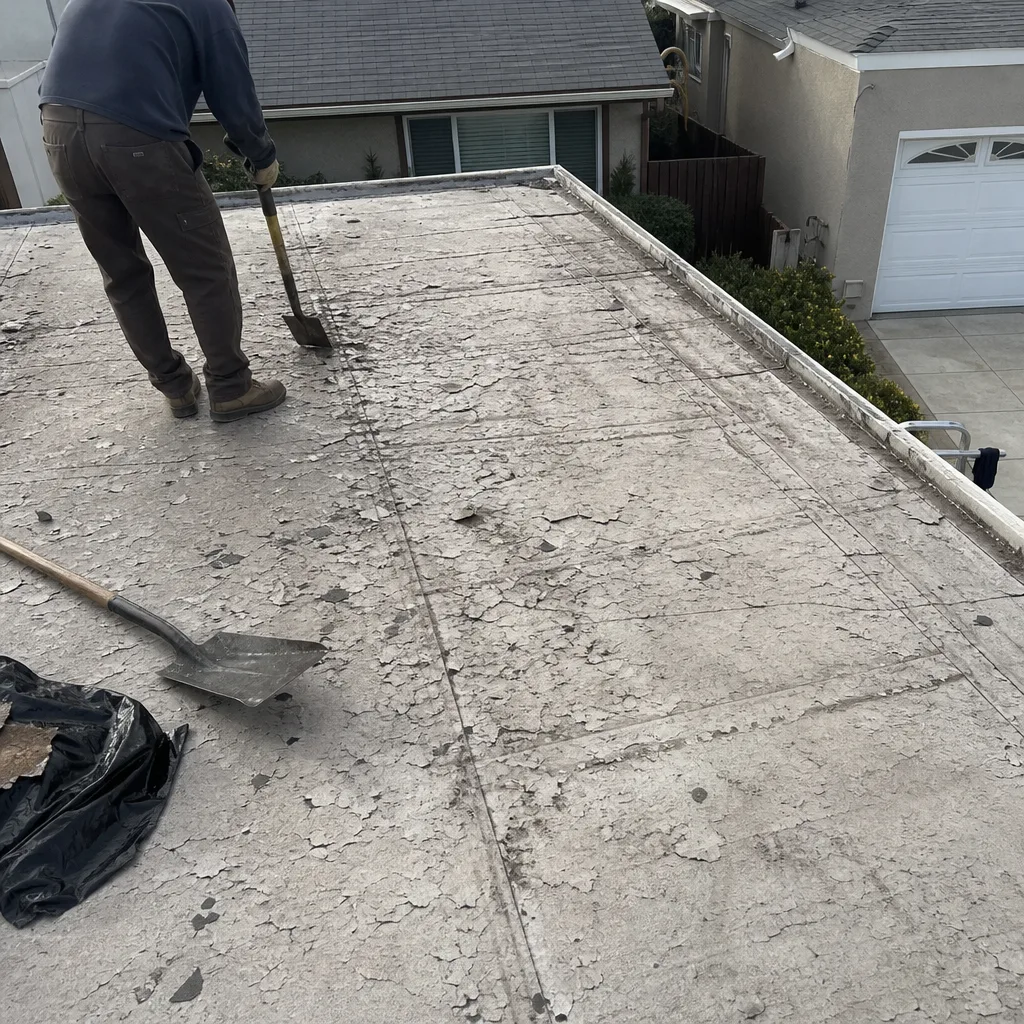
See the difference
 Before
 After
 Before
 After
 Before
 After
When to Call a Professional
Some situations are not DIY-eligible under any circumstances. If you notice water stains on your ceiling, granules collecting in your gutters, shingles cupping or curling, or visible flashing damage around a chimney or vent pipe, call a roofing professional. These are signs of active failure, not cosmetic issues. If your roof is over 20 years old and you are planning to sell within five years, a professional inspection will tell you whether replacement makes sense now or whether a targeted Roof Repair in Fountain Valley buys you more time. If you have storm damage from a Santa Ana event, document it with photos and call before making a temporary patch that could complicate an insurance claim. Roof work involves heights, and inspecting a roof requires walking on surfaces that may be structurally compromised. We recommend leaving roof access to a professional with proper safety equipment and insurance. Willowbrook Roof Repair offers free estimates in Fountain Valley. Call (866) 860-9404 and we will walk the roof with you, point out what we see, and give you a written, line-item proposal.
Frequently Asked Questions
A full roof replacement in Fountain Valley typically runs between $12,000 and $28,000 depending on roof size, pitch, shingle choice, and decking condition. Architectural shingles run higher than 3-tab. Stone-coated steel from Boral runs higher still. The only way to get an accurate number for your specific roof is a written estimate. Call (866) 860-9404 for a free estimate and we will give you a line-item proposal, not a ballpark.
Go to the CSLB website and search by license number or business name. Confirm the license is active, the classification is C-39 (roofing), and there are no outstanding disciplinary actions. Do not accept a license number from the contractor without verifying it independently. The CSLB lookup is free and takes under a minute.
Yes. A full roof replacement in Fountain Valley requires a building permit from the City of Fountain Valley Community Development Department. The permit triggers a city inspection of underlayment, nailing pattern, flashing, and ventilation before final shingles are installed. A contractor who says no permit is needed is not a contractor you want on your roof.
A typical single-family roof replacement in Fountain Valley takes 2 to 5 days depending on roof size, pitch, number of layers being removed, and weather. The city inspection adds another day or two to the schedule. Ask your contractor for a written schedule before signing.
There is no single best brand. The right shingle depends on your roof pitch, your attic ventilation, your budget, and whether your project triggers Title 24 cool roof requirements. Any of the major brands, including GAF, CertainTeed, Tamko, and Boral, make products suited to Fountain Valley conditions. The question is which product matches your specific roof. We install all seven major brands so we can recommend honestly. Call (866) 860-9404 and we will explain the tradeoffs in plain language.
It should not, unless the tear-off reveals decking damage that was not visible before the work started. Rot cannot be seen from above. A legitimate proposal will specify the cost per sheet for decking replacement so you know exactly what any change order would cost. If a contractor refuses to put decking replacement cost in the proposal, that is a red flag. Our proposals include fixed pricing with no change orders unless we show you exactly what we found and you approve the additional cost in writing before we proceed.
The Bottom Line
Hiring a roofing contractor in Fountain Valley is less about license verification and more about the questions most homeowners never think to ask. Who is actually installing the roof? How many shingle brands does the contractor work with? What does the workmanship warranty actually specify? Did the permit get pulled and the inspection passed? These questions separate a roof that lasts from a roof that leaks. The Willowbrook Roof Repair home is built around one trade with seven manufacturer relationships, full lifecycle coverage from inspection through replacement, and recommendations driven by your roof, not a preferred-vendor deal. From a single damaged section to a full tear-off and replacement, one call covers the entire job. Start with an inspection. Call (866) 860-9404 to schedule your free estimate in Fountain Valley.
Written by the team at Willowbrook Roof Repair, serving Fountain Valley since 2012.