Last updated October 30, 2026
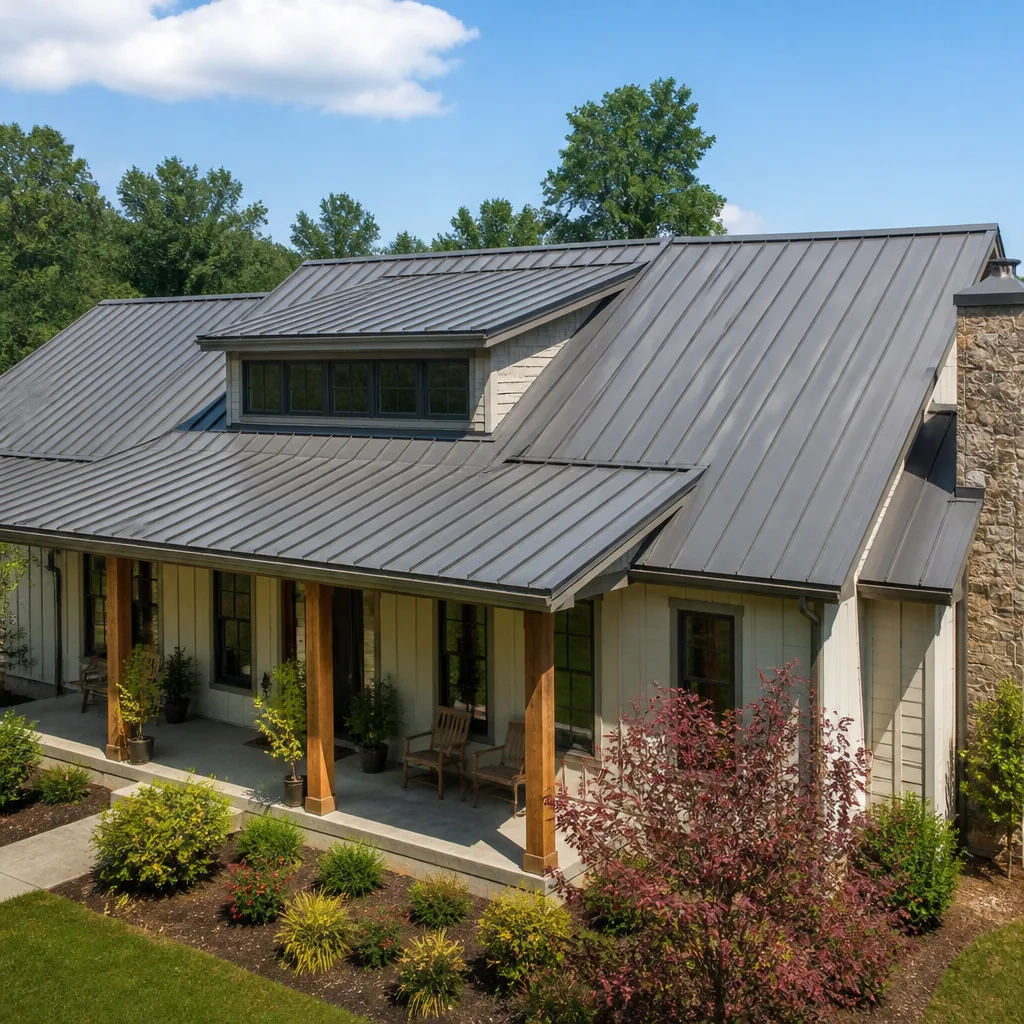 Metal roofing
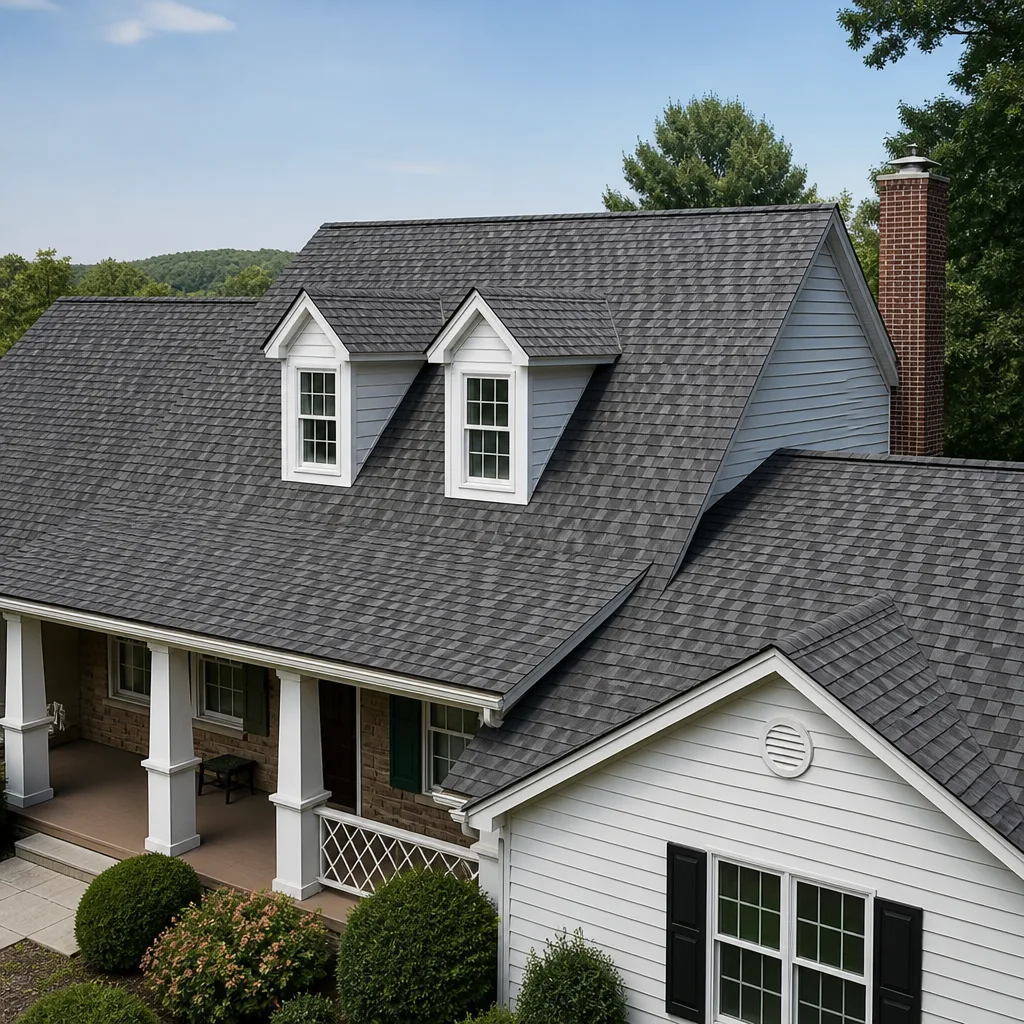
 Architectural shingles
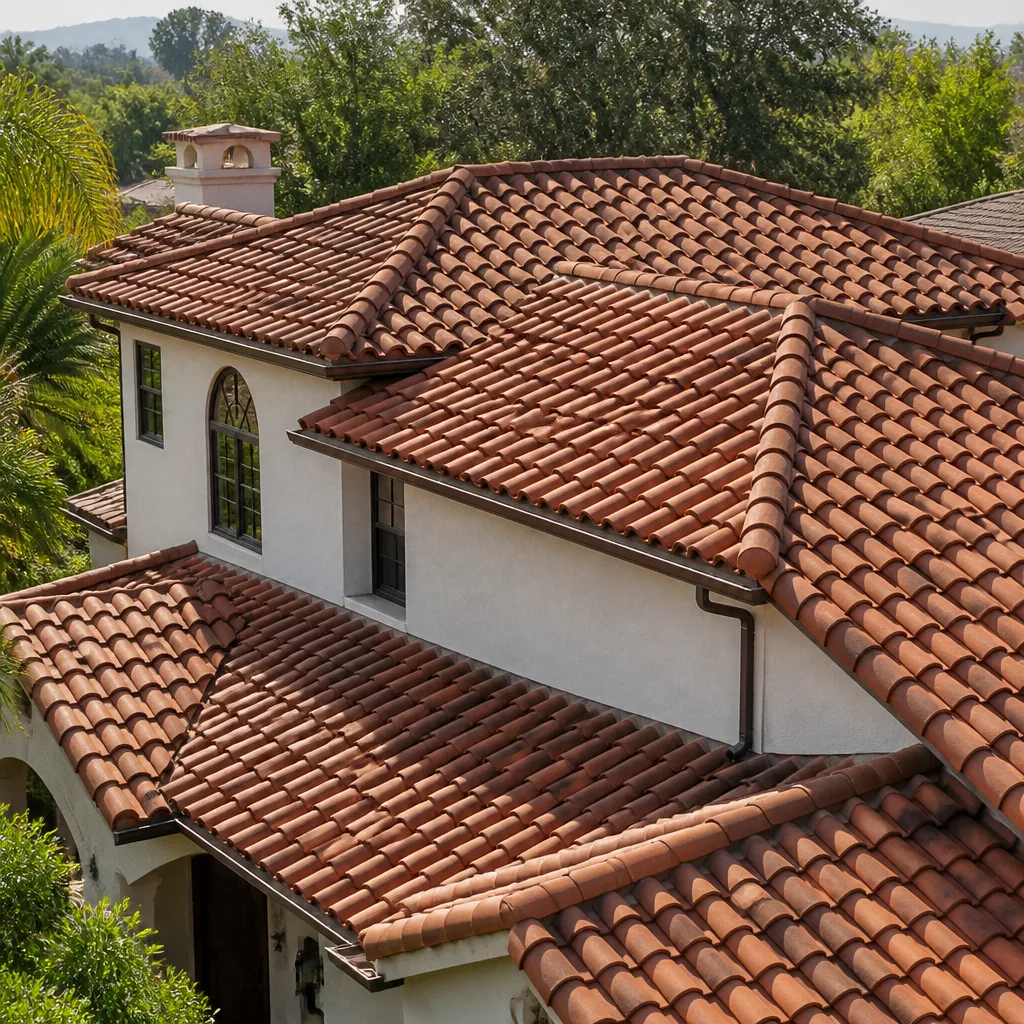 Tile roofing
 GAF
 Owens Corning
 Flat & low-slope
Free roof inspection with deck photos before we talk money - GAF and Owens Corning certified installation
DIY vs Professional Roofing: The Fountain Valley Homeowner’s Decision Guide
Most roofing advice starts with the wrong question. It asks “are you handy?” when it should ask “what happens if this fails?” The real math of DIY roofing isn’t about skill. It’s about failure modes. Replace three cracked tiles yourself and you’re out about $40 and a Saturday morning. Do it wrong, and you’ve created a water intrusion path that eats through underlayment, sheathing, and ceiling drywall for two years before you notice the stain. That’s a $3,000 repair that started as a $40 fix. In Fountain Valley, where our winter rains come in short, intense bursts and our summers bake roof surfaces past 140 degrees, that hidden leak compounds fast. This guide maps every common roofing task against three things: what it costs to attempt yourself, what it costs when it goes wrong, and what California law says about who’s allowed to do it. By the end, you’ll know exactly which jobs are yours and which ones belong to a licensed roofer.
Styles & brands we work with
Quick Answer
For Fountain Valley homeowners, DIY roofing is reasonable for two tasks: visual inspection and gutter cleaning. Everything else carries either a permit consequence, a warranty consequence, or a liability consequence that outlasts the repair itself. Minor caulk resealing is possible for experienced DIYers with specific caveats. Cracked tile replacement, underlayment repair, and full re-roofs belong with a licensed professional.
Table of Contents
- What California Law Actually Says About DIY Roofing
- The Permit Problem: Fountain Valley’s Re-Roof Requirements
- The Task Matrix: What’s DIY, What’s Not, and Why
- The Real Cost of a Failed DIY Repair
- Warranty, Insurance, and Liability: What a Pro Brings
- How to Tell If Your ‘Quick Patch’ Is Masking a Bigger Problem
- Fountain Valley Climate Factors That Change the Equation
- Common Mistakes to Avoid
What California Law Actually Says About DIY Roofing
California Business and Professions Code Section 7048 is the relevant statute here. It says an owner-builder can perform work on their own single-family residence without holding a contractor’s license, as long as the home is not intended for sale within one year of completion. That sounds permissive. And for some trades it is. But roofing carries a second layer of regulation: Title 24 of the California Code of Regulations, which sets energy and fire standards that most DIY re-roofs simply do not meet. The moment you strip more than a small patch of roofing material, you trigger requirements for cool roof ratings, underlayment specifications, and ventilation calculations that require manufacturer documentation and sometimes third-party verification.
What this means in practice: you are legally allowed to replace individual broken tiles on your own Fountain Valley home. You are legally allowed to dab roofing cement on a small crack. You are legally allowed to clean your own gutters. What you are not allowed to do without crossing into a gray area is remove and replace underlayment, alter the roof structure, or install a new roof system. Those jobs require a C-39 roofing contractor’s license because they involve re-establishing the roof’s waterproofing assembly. Do them wrong and your insurance carrier has grounds to deny the resulting water damage claim.
Insurance is the part nobody talks about. Standard homeowners policies in California cover sudden and accidental damage. They do not cover damage caused by faulty workmanship. If you reroof your own home, skip the permit, and the roof leaks during a heavy rain, your insurer can deny the entire claim on the basis that the loss resulted from unpermitted, substandard work. We have seen this happen in Fountain Valley more than once. The homeowner saved $8,000 on the re-roof and lost $40,000 on the resulting interior damage. That’s not a trade. That’s a gamble with terrible odds.
The Permit Problem: Fountain Valley’s Re-Roof Requirements
The City of Fountain Valley requires a building permit for any full roof replacement. This is not a formality. The permit triggers a series of inspections that verify the underlayment is installed correctly, the nailing pattern meets code, and the ventilation is adequate. Miss any of those and the inspector will not sign off. That inspection record becomes part of your property file.
Here’s the consequence nobody explains until it’s too late. When you sell a home in Fountain Valley, California Civil Code Section 1102 requires you to disclose any work done without a permit, including roofing work. If you did an unpermitted re-roof, you must disclose it. Buyers typically respond by demanding a price reduction large enough to cover a permitted re-roof, or they walk. We have had homeowners call us with this exact problem: they re-roofed their own home a decade ago, they now want to sell, and the buyer’s inspector flagged the roof. They end up paying for a full permitted replacement anyway, but now under time pressure and with the original “savings” long gone.
There’s a subtler version of this problem too. Even if you never sell, an unpermitted re-roof can complicate a future insurance claim. If your home burns in a wildfire or floods from a storm, the adjuster’s first questions include “was the roof permitted?” An unpermitted roof gives the carrier a denial path. In Fountain Valley, where homeowners insurance has become harder to get and easier to lose, that risk is not theoretical.
The honest framing: a permit is not bureaucracy. It’s the paper trail that protects you for the life of the roof. When you hire a licensed roofer, that roofer pulls the permit, schedules the inspections, and stands behind the work. The permit is part of the service. When you DIY it, the permit is the part you skip because you don’t want to deal with it, and that’s precisely the part that comes back to cost you.
The Task Matrix: What’s DIY, What’s Not, and Why
Not all roofing work carries the same risk. The useful question is: what’s the cost of being wrong? Here’s how we break down the most common Fountain Valley roofing tasks, from safest to riskiest for a homeowner.
Tier 1: Genuinely DIY
- Gutter cleaning. Blocked gutters in Fountain Valley’s older neighborhoods, especially around Mile Square Park where mature trees drop leaves and needles, are the single most common cause of avoidable roof edge damage. You need a ladder, gloves, a bucket, and a hose. The failure mode is falling off the ladder, which is real but manageable with a spotter and proper ladder setup.
- Visual roof inspection from the ground or a safely placed ladder. You are not looking for subtle defects. You are looking for obvious problems: cracked or missing tiles, lifted ridge caps, visible underlayment, moss growth, and granules accumulating in gutters. Take photos from multiple angles. Note anything that looks wrong. This information makes you a smarter customer when you do call a roofer.
Tier 2: DIY with Serious Caveats
- Minor caulk and sealant touch-ups. Small gaps around roof penetrations like vent pipes or satellite dish mounts can sometimes be resealed with a high-quality polyurethane sealant. The caveat: you must know what you are looking at. Sealant that does not bond to the existing material will peel in one season. Sealant applied over active rot hides the problem without fixing it. And on a steep roof, even this “simple” task puts you at height without fall protection. We recommend this only for single-story homes with a walkable pitch and only for gaps smaller than a quarter inch. Anything larger suggests a mechanical problem, not a sealant problem.
Tier 3: Skill-Dependent (Usually Professional)
- Cracked tile replacement. This is the one most homeowners think they can handle, and it’s the one we see go wrong most often. A clay or concrete roof tile is not just sitting on the roof. It interlocks with the tiles around it, and the overlap pattern is what sheds water. Remove a tile wrong and you have broken the water-shedding sequence. Re-set it without proper mortar or mechanical attachment and wind will eventually lift it. Then there’s the underlayment issue: in most homes, the tile is the visible wearing surface, but the underlayment beneath it is the real waterproofing layer. A broken tile with intact underlayment is a cosmetic issue. A broken tile with deteriorated underlayment is a leak waiting to happen. Most DIYers have no way to assess the underlayment. That’s the part that requires a professional eye.
Tier 4: Professional Only
- Underlayment repair or replacement. Underlayment is the waterproof membrane beneath your tile, shingle, or metal roofing. Its installation requires meticulous attention to overlapping, sealing, and fastening. A small gap or tear becomes a leak. Because it’s hidden beneath the top layer, you cannot see whether you did it correctly until it rains. By then, the damage is done.
- Full re-roof or large-section replacement. This triggers the Fountain Valley permit requirement, manufacturer warranty validation, and Title 24 compliance we covered earlier. There is no version of this job that makes sense as a DIY project. The materials alone for a typical Fountain Valley home run $6,000 to $15,000. The labor adds another $8,000 to $20,000. The risk you are buying down with a professional is not the installation itself. It’s the warranty, the permit record, and the liability if the installation fails.
The Real Cost of a Failed DIY Repair
The number that matters isn’t the cost of the repair. It’s the cost of the repair plus the cost of everything downstream if the repair fails. Let’s make that concrete for a typical Fountain Valley home.
Scenario A: Cracked tile replaced correctly. Materials cost $15 for a replacement tile and mortar. Time cost is two hours. Total: under $50. The roof performs as designed for another ten years.
Scenario B: Cracked tile replaced incorrectly. The homeowner pries up the broken tile, breaks the adjacent one in the process, cements the original back down without re-establishing the interlock, and climbs down satisfied. First winter rain finds the gap. Water runs sideways along the underlayment seam, which was already twelve years old and marginal. The water finds a staple hole in the underlayment and drips onto the roof sheathing. Six months later, a stain appears on the bedroom ceiling. The homeowner calls a roofer. The roofer removes the tiles in that section, finds rotted sheathing, replaces it, installs new underlayment, and re-sets the tiles. Cost: $2,800 to $3,500 depending on the section size and whether the sheathing has spread rot. Plus a drywall repair inside. Total: approximately $3,800.
The point isn’t that this always happens. The point is that the homeowner had no way to assess the underlayment condition before starting. That’s the hidden variable. A professional inspector sees the underlayment edge at the rake or eave and can estimate its remaining life. A homeowner sees only the surface tile. The DIYer is betting $50 against $3,800 with no way to read the odds.
In Fountain Valley specifically, our roof surfaces are aging. Many homes in the Greenbrook and Westmont neighborhoods were built in the late 1960s and 1970s. Original underlayment on those homes, if never replaced, is decades past its service life. A broken tile on one of those roofs is a red flag, not a standalone fix. The correct move is an inspection by a roofer who can tell you what is actually happening beneath that tile.
Warranty, Insurance, and Liability: What a Pro Brings
Three things come with a professional roofing job that a DIY job cannot replicate, no matter how skilled the homeowner. All three matter more over the life of the roof than the installation itself.
Manufacturer Warranty Validation
Every major shingle and tile manufacturer, including CertainTeed, Owens Corning, IKO, and Atlas, issues material warranties that are only valid when the product is installed by a licensed contractor according to the manufacturer’s published installation specifications. Install the same CertainTeed shingle yourself and you get no warranty. Not a reduced warranty. No warranty. The warranty value on a full roof replacement is not trivial. It covers material defects for 20 to 50 years depending on the product. That’s real financial protection you forfeit by installing it yourself. A licensed roof replacement in Fountain Valley should always include a copy of the warranty and the installer’s documentation.
Code-Compliant Permit Documentation
We covered this in the permit section, but it bears repeating in the context of what a professional brings. A licensed roofer pulls the Fountain Valley permit, passes the inspections, and files the completion. That documentation stays with the property. It protects you at sale. It protects you in an insurance claim. It protects you if a future contractor needs to understand how the roof was built. The permit is not a piece of paper. It’s a legal record of a code-compliant installation.
Liability Coverage
If a professional roofer installs a roof and it leaks due to faulty workmanship, the roofer’s liability insurance and workmanship warranty apply. You can file a claim. You have legal recourse. If you install your own roof and it leaks, you have no recourse. Your insurer may deny the resulting damage claim because the work was unpermitted and unlicensed. You eat the cost. This is the piece of the DIY-versus-professional calculation that almost never appears in YouTube comments but always appears in our reality when a homeowner calls us after the fact.
At Willowbrook Roof Repair, we work across seven major roofing brands. That’s more brand coverage than most roofers who stock one or two lines. The relevance here is that our recommendations are not driven by a supplier agreement. We start with an honest inspection. You’ll know exactly what needs to be done, and why, before any work begins. Built around your roof, not a brand deal.
How to Tell If Your ‘Quick Patch’ Is Masking a Bigger Problem
The most dangerous DIY roof project is the one that appears to work. You patch a small leak, the stain stops growing, and you conclude the problem is solved. Meanwhile, the water has found another path. Here are the signs that your quick fix is covering up a systemic issue.
- The leak returns within a year, in the same room. Water follows the path of least resistance. If the same ceiling stain reappears after a patch, the original intrusion point was never found. The patch addressed a symptom.
- The stain appears in a different location after a heavy rain. This is the classic sign that water is traveling along the underlayment or framing before dripping. The actual breach may be several feet from the visible stain. Fix the stain location and the breach continues.
- You see daylight through the roof boards from inside the attic. This means there is a physical gap in the roof assembly. No amount of sealant applied from the exterior will correct a failed deck seam or missing underlayment section.
- Your energy bills are climbing without a change in behavior. Moisture in the roof assembly destroys insulation’s R-value. If the attic insulation is wet, your HVAC runs harder. The leak may be invisible, but the utility bill notices.
- Granules from asphalt shingles are accumulating in the gutters. This is normal for a shingle roof near the end of its life, but if your roof is under fifteen years old and you’re seeing heavy granule loss, the shingles are deteriorating faster than expected, often due to trapped moisture or poor attic ventilation.
If you see any of these signs, the correct next step is a professional inspection, not another patch. The inspection will cost a few hundred dollars. It will tell you whether the problem is a localized repair or a systemic failure. That information changes everything. Roof repair in Fountain Valley is our most common single service, and the majority of those repairs start as an inspection that revealed more than the homeowner expected.
Fountain Valley Climate Factors That Change the Equation
Fountain Valley’s roof surfaces live a hard life. We’re close enough to the coast to get marine-layer moisture in the mornings, far enough inland to hit triple digits in August. That daily swing from damp to hot to cool stresses roof materials in a way that a more moderate climate does not. Here’s what that means for the DIY decision.
The marine layer is a hidden moisture source. Fountain Valley gets fog and low cloud cover on many mornings, especially from May through July. That moisture condenses on roof surfaces and lingers in shaded areas. It’s not enough rain to find a leak. It’s enough to keep a small water intrusion damp for weeks, which is longer than it needs to cause rot. A DIY patch that is not perfectly sealed becomes a moisture trap.
Summer heat accelerates material fatigue. Roof surface temperatures in Fountain Valley regularly exceed 140 degrees in direct August sun. That’s hot enough to soften some sealants and cause thermal expansion in metal flashed penetrations. A sealant that looked fine in March may be failing by September because it was the wrong product for the temperature range. This is the kind of material selection detail that a professional roofer brings, and it’s why we lean on products from CertainTeed, Owens Corning, IKO, and Atlas rather than big box generics.
Winter rain comes in fast, heavy bursts. When Fountain Valley gets rain, it tends to come as a concentrated series of storms, not a slow drizzle. That’s when roofs fail. A small opening that goes unnoticed for months dumps water into the attic during one storm. By the time the homeowner notices the ceiling stain, the damage is done. This is why we tell homeowners that the dry season is the time to inspect, not the rainy season. Willowbrook Roof Repair home offers inspections year-round, and the smart move is to schedule one before the winter storm cycle begins.
Common Mistakes to Avoid
- Using the wrong sealant for the material. The sealant that works on a metal vent pipe flange is not necessarily the sealant that bonds properly to clay tile or concrete. Using a generic silicone from the hardware store on a tile roof is a frequent source of repeat leaks. The sealant bonds to the tile surface, not the tile body, and fails in one season.
- Replacing a tile without checking the underlayment. As covered earlier, the tile is the wearing surface. The underlayment is the waterproofing. If you replace a tile over failed underlayment, you have done nothing except give yourself a false sense of security. The leak continues.
- Assuming “no visible leak” means “no problem.” Water can travel long distances along roof framing before dripping. A dry ceiling does not mean a dry roof assembly. The moisture may be soaking insulation and sheathing where you cannot see it.
- Patching a roof without documenting the work. If you do a small DIY repair and then sell the home, you are required to disclose it. Undocumented repairs become red flags during inspection. Keep photos and receipts for any work you do, even small caulking jobs.
- Ignoring the age of the roof when deciding to patch. A twenty-five-year-old roof with a cracked tile is telling you something. The tile is failing because the whole system is at the end of its service life. Patching one tile is a stopgap. The right decision is to evaluate the entire roof for replacement, not to feed it patches indefinitely.
- Walking on a tile roof without proper technique. Clay and concrete tiles crack under point loads. If you walk on the tile surface, you will crack tiles. A professional roofer knows how to distribute weight across the tiles and where to step. A homeowner who climbs up to “take a look” often causes more damage than they find.
When to Call a Professional
Here’s the plain-spoken version. Call a roofer when any of these apply: you see a water stain on a ceiling or wall, you find granule accumulation in the gutters, you have missing or visibly cracked tiles, your roof is over twenty years old and has never been professionally assessed, or you’re selling the home and need a clean inspection report. Also call a roofer when you catch yourself unsure about what you’re looking at. The most expensive words in this conversation are usually “I thought it would be fine.”
Willowbrook Roof Repair offers free estimates in Fountain Valley. From a single damaged section to a full tear-off and replacement, one call covers the entire job. Call (866) 860-9404 to schedule yours.
Frequently Asked Questions
No. The City of Fountain Valley requires a building permit for any full roof replacement. Doing the work without a permit creates a disclosure obligation at sale, can void manufacturer warranties, and gives your insurance carrier grounds to deny a future claim. A licensed roofer handles the permit as part of the job.
California’s owner-builder exemption allows you to do minor work on your own home without a contractor’s license. For roofing, this realistically means gutter cleaning, visual inspection, replacing individual broken tiles, and small sealant touch-ups. Full re-roofs, underlayment replacement, and structural work require a licensed C-39 roofer.
A single cracked tile replacement is about $15 to $40 in materials for a DIY job, versus $200 to $400 for a professional repair that includes underlayment assessment and proper re-setting. The DIY savings vanish entirely if the repair fails and causes interior water damage. The cost ratio is not the material cost. It’s the cost of being wrong.
Probably not. Standard California homeowners policies exclude damage caused by faulty workmanship, and unpermitted work is particularly vulnerable to denial. You may be better off having a licensed roofer perform any repair that involves waterproofing, because their liability coverage and workmanship warranty back the work.
You don’t, and that’s the honest answer. The only way to know is to inspect the underlayment, decking, and roof framing, which requires pulling tiles or shingles in the affected area. A professional inspection tells you whether you’re looking at a localized repair or a failure of the entire roof system. We start with an honest inspection every time.
That depends on the material. Concrete tile roofs in Fountain Valley can last fifty years or more with proper underlayment replacement at the thirty-year mark. Asphalt shingle roofs from CertainTeed, Owens Corning, IKO, or Atlas typically last twenty-five to thirty-five years depending on the product line and ventilation. Our climate’s temperature swings and marine moisture tend to shorten the life of cheaper materials.
The Bottom Line
The DIY-versus-professional question for roofing is not about proud craftsmanship. It’s about failure modes, and failure modes are about consequences: a permit file you skip, a warranty you void, an insurance claim you lose. Clean your gutters. Look at your roof. Take photos. Reseal a small gap if you know what you’re doing. For routine care, see our Roof Repair Maintenance Checklist for Fountain Valley Homeowners. And when the job involves waterproofing, structural integrity, or legal documentation, make the call to a licensed professional. It’s the cheapest version of the expensive path. Willowbrook Roof Repair serves Fountain Valley across the full range of residential roofing: inspection, repair, and replacement. Roofing is the only thing we do, and we do it across major brands like CertainTeed, Owens Corning, IKO, and Atlas so the recommendation follows your roof, not our inventory. Call (866) 860-9404 for a free estimate.
Written by the team at Willowbrook Roof Repair, serving Fountain Valley since 2012.
See the difference
 Before
 After
 Before
 After
 Before
 After